Tattoo Removal Sessions: How Many You May Need and How Far Apart
Medical Director Dr Sin Yong explains how the number of tattoo removal sessions is estimated, why sessions are spaced weeks apart, and how long a course takes.
WhatsApp to Enquire →Key facts ↓Most tattoos need several tattoo removal sessions, often six to twelve for professional work and fewer for small amateur ones. Sessions are usually six to eight weeks apart or longer, so a full course commonly takes a year or more.
- A six-factor score predicts sessions: in 100 patients the Kirby-Desai score correlated with the number of sessions needed (r = 0.757); the average score was 9.87 and the average number of sessions 9.91 [1].
- Short gaps slowed progress: in a cohort of 352 people treated with Q-switched lasers, intervals of eight weeks or less between sessions were linked with a poorer response, as were smoking, colours other than black and red, and tattoos on the legs or feet [2].
- Darkly pigmented tattoos still take a course: 12 people treated with a 755 nm picosecond laser at about six-week intervals needed an average of 4.25 sessions to reach the study clearance level [3].
- Picosecond can mean fewer sessions: in a 2026 review of 130 tattoo patients, the picosecond 1064 nm group needed a median of 3 sessions and the Q-switched group 4 [4].
- Same tattoo, different pulse: when halves of 16 black tattoos were treated four times at four-week intervals, the picosecond side lightened more in 12 [5].
How many sessions does tattoo removal take?
There is no single number: small black amateur tattoos may fade in a handful of sessions, while dense professional or multicoloured work often needs ten or more.
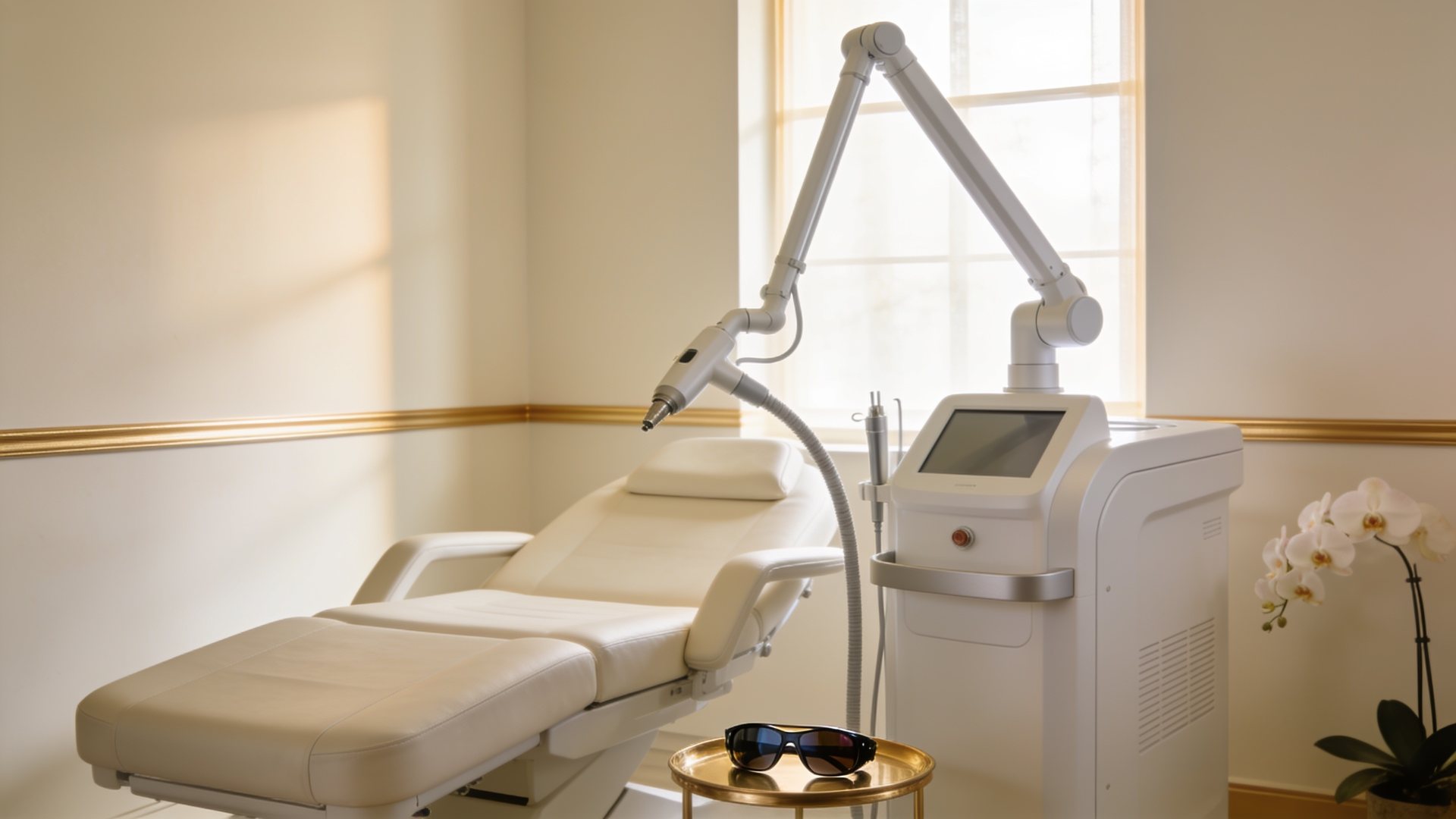
This page explains how that estimate is reached and how long a course takes on the calendar. The treatment itself is described on tattoo removal in Singapore. At IN Eternity Clinic, Dr Sin Yong gives a range at the first assessment and revises it at every review. Tattoos are treated on the DEKA TORO (his “T2 laser tattoo removal”) or the Fotona StarWalker PQX, with the wavelength chosen per colour.
| Tattoo | Typical range of sessions | Why |
|---|---|---|
| Small amateur, black only | A few | Less ink, often unevenly and shallowly placed |
| Professional black line work | Several to many | More ink, placed evenly and deeper |
| Professional, dense black shading | Many | Large amounts of ink in each area |
| Multicoloured professional | Many, sometimes with a remaining trace | Each colour fades at its own rate |
| Cover-up over an older tattoo | Many | Two layers of ink at different depths |
| Cosmetic brows or liner | Often two to four | Small, shallow, but test area first |
| Fading for a new tattoo | Fewer than full removal | The aim is lighter, not gone |
Why can’t a tattoo be removed in one session?
Because the laser only breaks ink into fragments; your immune system removes them, and that takes weeks. Each session clears part of the ink.
Ink particles in the dermis are too large for immune cells to carry away. A laser pulse shatters them, and the smaller fragments are collected and cleared through the lymphatic system over the following weeks. The skin can only take so much energy at one visit, and the white frosting after the first pass shields the ink beneath it from further passes. Researchers have tested repeated passes within a single visit [6], and multi-pass approaches are part of current practice [7], but they add to, rather than replace, a course of sessions.
What is the Kirby-Desai scale for tattoo removal?
It is a six-factor score, published in 2009, that estimates how many laser sessions a tattoo will need: skin type, location, colours, amount of ink, scarring and layering.
| Factor | Points | What scores higher |
|---|---|---|
| Skin type (Fitzpatrick) | I = 1 up to VI = 6 | Darker skin, treated with gentler settings |
| Location | Head and neck 1; upper trunk 2; lower trunk 3; upper arm or thigh 4; hands, feet and lower limbs 5 | Further from the heart, with poorer circulation |
| Colours | Black only 1; mostly black with some red 2; black, red and other colours 3; multiple colours 4 | More colours |
| Amount of ink | Amateur 1; minimal 2; moderate 3; significant 4 | Dense professional shading |
| Scarring or tissue change | None 0; minimal 1; moderate 3; significant 5 | A raised, scarred or overworked tattoo |
| Layering | None 0; layered or cover-up 2 | A tattoo over another tattoo |
In the original 100 patients the total score tracked the number of sessions closely (r = 0.757), and scores above 15 suggested a tattoo that would be difficult to remove [1]. The scale was built on Q-switched lasers; newer picosecond devices may need fewer sessions for some tattoos, so it is used as a starting point rather than a forecast.
How does the score work on a real tattoo?
Add the six scores. A small amateur black tattoo on fair skin may score about 5; a dense colour piece on the ankle in darker skin can score 18 or more.
| Example A | Example B | Example C | |
|---|---|---|---|
| Tattoo | Small amateur black initials, upper arm | Professional black script, inner wrist | Professional colour flower, ankle, over an older tattoo |
| Skin type | III = 3 | IV = 4 | IV = 4 |
| Location | Upper arm = 4 | Wrist (distal limb) = 5 | Ankle = 5 |
| Colours | Black only = 1 | Black only = 1 | Multiple colours = 4 |
| Amount of ink | Amateur = 1 | Moderate = 3 | Significant = 4 |
| Scarring | None = 0 | None = 0 | Minimal = 1 |
| Layering | None = 0 | None = 0 | Cover-up = 2 |
| Total | 9 | 13 | 20 |
Example C shows why a cover-up over an old tattoo, in colour, on the ankle, is the slowest kind of removal. Example A shows why skin type alone can make a simple tattoo take longer in Singapore than the same tattoo on fair skin.
How long should you wait between tattoo removal sessions?
Usually at least six to eight weeks, and often longer. The skin needs to heal and the immune system needs time to clear fragments.
Treating sooner does not speed things up: the ink from the last session is still being cleared, and healing skin is more likely to blister or change colour. In a cohort of 352 people, intervals of eight weeks or less were associated with a poorer response than longer gaps [2]. Picosecond studies have commonly used six to eight week spacing [3].
- Longer gaps are used for darker skin, after a tan, if the last session left lingering redness or pigment change, and on the hands, feet and ankles.
- The gap is not fixed: the next session is booked once the skin has fully settled and the fading from the last session has been reviewed against photographs.
- Breaks are fine. Pausing for travel, pregnancy or work does not undo progress; ink that has been cleared stays gone.
How long does a full tattoo removal course take?
Multiply the gaps, not the sessions. Eight sessions eight weeks apart span about thirteen months from first to last, before the final review.
| Number of sessions | At 6-week gaps | At 8-week gaps | At 12-week gaps |
|---|---|---|---|
| 3 | About 3 months | About 4 months | About 6 months |
| 5 | About 6 months | About 7 months | About 11 months |
| 8 | About 10 months | About 13 months | About 19 months |
| 10 | About 12 months | About 17 months | About 2 years |
| 12 | About 15 months | About 20 months | About 2.5 years |
That is why an event date, a job requirement or a planned cover-up is worth mentioning at the first visit: the plan and spacing can be set around it.
“The number of sessions is not a price list. It is an estimate that gets better every time we see how your ink responded, so I give a range at the start and narrow it as we go.”
Does picosecond laser reduce the number of sessions?
It can. Picosecond pulses break ink more finely, and studies comparing them with Q-switched lasers often report fewer sessions, though not for every tattoo or colour.
When halves of the same black tattoos were treated with each pulse length, the picosecond side lightened more in 12 of 16 [5]. A 2026 retrospective review reported a median of 3 picosecond sessions against 4 Q-switched [4]. The wavelength must still match the colour. The full comparison is in picosecond vs Q-switched tattoo removal, and colour by colour in colour tattoo removal.
Can you do anything to need fewer sessions?
Some things help: not smoking, keeping the tattoo out of the sun, following aftercare and keeping to the spacing. Massaging, creams and supplements have no proven effect.
- Smoking: associated with a poorer response in a large cohort [2]; stopping during a course may help.
- Sun: tanned skin is treated more gently, which can add sessions; cover the tattoo or use sunscreen.
- Aftercare: blisters, infection or picked scabs can force a longer gap; see tattoo removal aftercare.
- Goal: fading for a new design needs fewer sessions than full removal; see tattoo fading for a cover-up.
What Dr Sin Yong looks for
- Your Kirby-Desai factors: skin type, location, colours, amount of ink, scarring and layering.
- How the ink responded at the last session, compared with standardised photographs.
- Whether the skin has fully settled since the last session, including any lingering redness or colour change.
- Colours that have appeared as darker ink cleared, which may need a different wavelength.
- Signs of a plateau, when further sessions are unlikely to add much.
- Your deadline, if any, and whether fading rather than full removal would meet it.
General clinical observations used at consultation; they describe what is checked, not any individual result.
Frequently asked questions
How many sessions does it take to remove a small tattoo?
Often fewer than a large one, but size is not one of the Kirby-Desai factors. A small, dense professional tattoo on the wrist can need as many sessions as a larger amateur one. See small vs large tattoo removal.
Can a tattoo be removed in 3 sessions?
Sometimes, if it is a small, amateur, black tattoo on the upper body, or if the aim is fading rather than removal. Most professional tattoos need more.
Why are tattoo removal sessions six to eight weeks apart?
The immune system clears ink fragments slowly and the skin needs to heal fully. Shorter gaps do not speed the result and can raise the risk of skin changes.
Can I have tattoo removal sessions closer together?
It is not usually advised. In a large cohort, gaps of eight weeks or less were linked with a poorer response. Several areas of one tattoo can, however, be treated in rotation.
How will I know when to stop?
When the tattoo is no longer visible, when you are happy with the fading, or when two reviews show little change. Further sessions are not offered if they are unlikely to help.
Does the number of sessions affect the cost?
Yes, the total depends mostly on how many sessions are likely. The tattoo removal cost guide explains the factors; the estimate is given after assessment.
Does it matter which laser is used?
The pulse length and wavelength both matter. IN Eternity Clinic uses picosecond and Q-switched pulses on two platforms, and chooses per colour.
Book an assessment
IN Eternity Clinic, 9 Scotts Road, #12-01 Pacific Plaza, Singapore 228210. By appointment with Medical Director Dr Sin Yong. Monday to Saturday, 11am to 8pm. WhatsApp or call +65 8815 3008. At IN Eternity Clinic a consultation fee applies, and it is waived if you go ahead with any medical treatment; the fee is S$120.
International KOL — CLASSYS · HIRONIC · DEKA · ALMA · FOTONA · LUTRONIC
References
- Kirby W, Desai A, Desai T, Kartono F, Patel G. The Kirby-Desai scale: a proposed scale to assess tattoo-removal treatments. J Clin Aesthet Dermatol 2009;2(3):32-37. PMC2923953
- Bencini PL, et al. Removal of tattoos by Q-switched laser: variables influencing outcome and sequelae in a large cohort of treated patients. Arch Dermatol 2012;148(12):1364-1369. doi:10.1001/archdermatol.2012.2946
- Saedi N, et al. Treatment of tattoos with a picosecond alexandrite laser: a prospective trial. Arch Dermatol 2012;148(12):1360-1363. doi:10.1001/archdermatol.2012.2894
- Chen et al. Q-switched 1064-nm laser versus picosecond 1064-nm laser in tattoo removal […]. J Cosmet Dermatol 2026. doi:10.1111/jocd.71098
- Ross EV, et al. Comparison of responses of tattoos to picosecond and nanosecond Q-switched neodymium:YAG lasers. Arch Dermatol 1998;134(2):167-171. doi:10.1001/archderm.134.2.167
- Kossida T, et al. Optimal tattoo removal in a single laser session based on the method of repeated exposures. J Am Acad Dermatol 2012;66(2):271-277 (online 2011). doi:10.1016/j.jaad.2011.07.024
- Ho SG, Goh CL. Laser tattoo removal: a clinical update. J Cutan Aesthet Surg 2015;8(1):9-15. doi:10.4103/0974-2077.155066
These sources describe mechanisms and general evidence. They are not a promise of any individual result; suitability is decided at an in-person assessment.