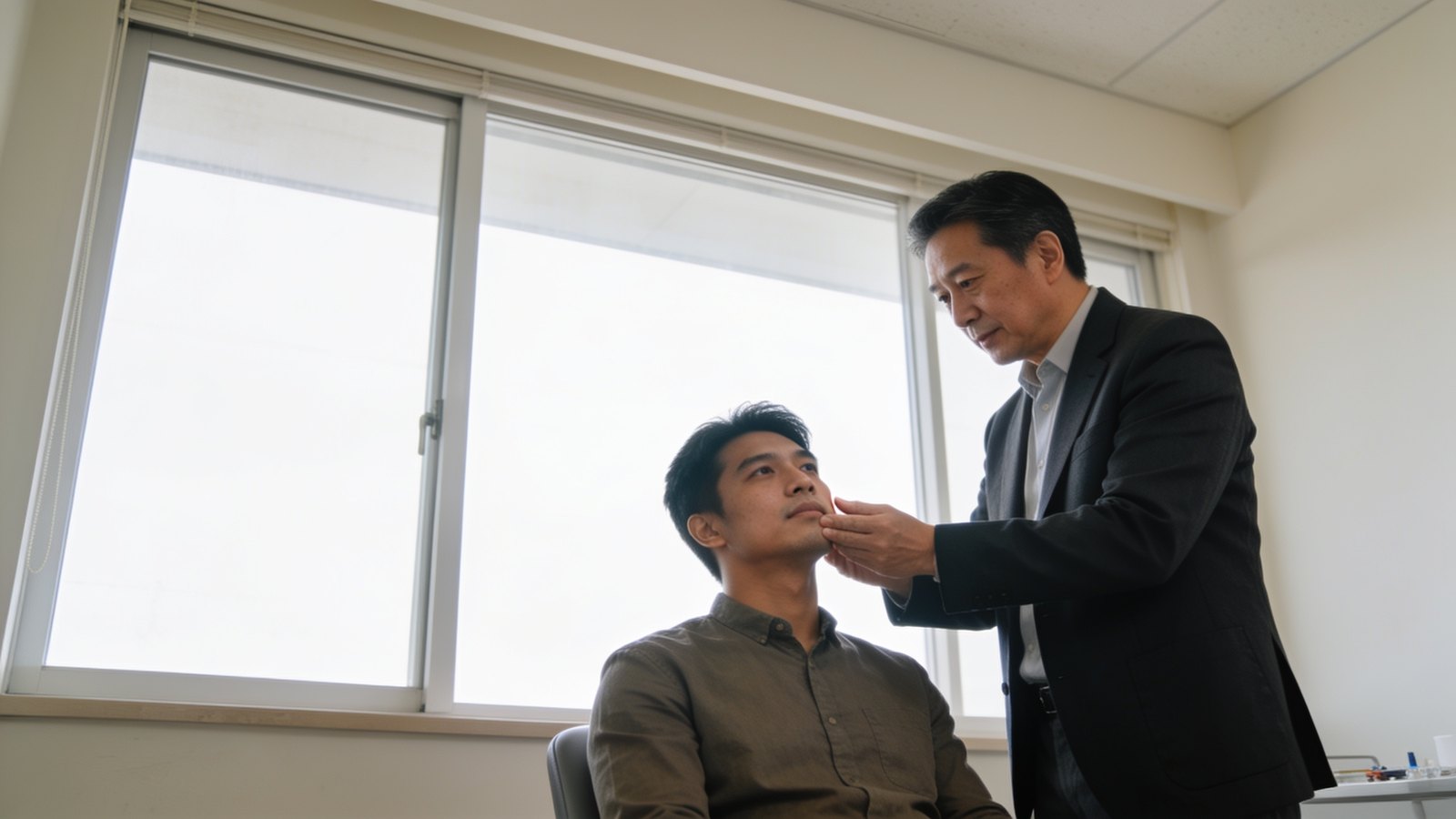
Ice-pick, rolling, raised and surgical scars need different tools. At IN Eternity Clinic, Dr Sin Yong names each scar type before choosing TCA CROSS, subcision, laser or injections.
WhatsApp to Enquire →Key facts ↓Scars cannot be erased, but most can be remodelled to be flatter, softer and less noticeable. The treatment depends on the type: TCA CROSS for ice-pick acne scars, subcision for rolling scars, fractional CO2 or RF microneedling for boxcar scars and stretch marks, steroid injections and silicone for keloids, and staged care for surgical scars. At IN Eternity Clinic, Dr Sin Yong identifies each scar type before planning.
Not in the sense most people hope. Once the dermis has healed with scar tissue, its collagen never returns to the pattern of uninjured skin. What treatment can do is remodel the scar so that it is flatter or shallower, softer, closer in colour to the surrounding skin and much harder to notice. “Scar removal” is the phrase people search for; “scar revision” is closer to what actually happens.
How much change is possible depends on the type of scar, its depth, its age, where it sits and how your skin heals. Two scars that look alike in a photograph may need entirely different treatments. That is why the first step at IN Eternity Clinic is naming each type present, and why this page is a map that points to the detailed page for each.
Scars fall into a few broad groups. The table matches each to the options used at IN Eternity Clinic and to the page that explains them in detail.
| Scar type | What it is | Options at IN Eternity | Read more |
|---|---|---|---|
| Ice-pick acne scars | Narrow, deep pits | TCA CROSS, then fractional CO2 to blend | TCA CROSS |
| Boxcar acne scars | Broader dips with steep edges | Fractional CO2 (S3), RF microneedling, TCA CROSS for narrow ones | Acne scar treatment |
| Rolling acne scars | Soft waves tethered by fibrous bands | Subcision, then resurfacing and collagen stimulation | Subcision |
| Mixed, moderate to severe acne scars | Several types together | Layered plan in one protocol | 4D Scar Reconstruction |
| Keloid and hypertrophic scars | Raised scars from excess collagen | Steroid injection, silicone, selected laser; referral for excision with adjuvant | Keloid treatment |
| Surgical and injury scars | Lines or patches after wounds | Wait for maturity, silicone, laser for redness and texture | Surgical scars |
| Stretch marks | Dermal scars from rapid stretching | Fractional laser, RF microneedling | Stretch marks |
| Red or brown acne marks | Pigment or vessels, not true scars | Gentle pigment laser, time, sun protection | Acne marks |
If your concern is on the back or chest, where skin is thicker and raised scars are more common, see back acne scar treatment.
Acne scars are the commonest reason people in Singapore look for scar removal, and they are rarely one type. Inflammation deep in a follicle destroys collagen; if the repair falls short, a dip forms whose shape depends on how the damage spread. Narrow, deep ice-pick scars need treatment inside the shaft. Steep-edged boxcar scars need their edges softened and their floors raised. Rolling scars are pulled down by fibrous bands that must be released before resurfacing can help.
That is why a single laser, however strong, usually leaves some scars untouched. At IN Eternity Clinic the tools are matched to the types: TCA CROSS for ice-pick scars, subcision for tethered scars, fractional CO2 on the DEKA Tetra Pro for edges and texture, RF microneedling where a lower pigment risk matters, and collagen stimulation where volume is lost. Active acne is settled first, because new spots in freshly treated skin create new marks. The full approach is on acne scar treatment Singapore.

A new scar keeps remodelling on its own for twelve to eighteen months. In the first weeks it is often red, raised and firm; most soften and fade substantially without help. Treatment is therefore staged by the scar’s age.
Intervening too aggressively on an immature scar can be counterproductive, and a scar that is widening across a joint or contracting may need a surgical opinion instead. See surgical and trauma scars.
Raised scars are handled differently from indented ones. A hypertrophic scar stays within the wound and often settles with time; a keloid grows beyond it and tends to return. The usual first step for both is a series of steroid injections into the scar, every four to six weeks, with silicone in between. Laser is added once the scar is flatter. Cutting a keloid out on its own carries a high chance of recurrence, so excision is combined with an adjuvant and may be referred to a hospital team.
Earlobe keloids after piercing and chest or shoulder keloids after acne are the commonest in Singapore. The detail, including prevention, is on keloid and hypertrophic scar treatment.
“Most scar plans disappoint because one tool is asked to solve three problems. A pit, a band and a mark need three different answers.”
Stretch marks are scars in the dermis, formed when skin stretches faster than its collagen and elastin can adapt, as in pregnancy, growth spurts, weight change or muscle gain. Early marks (striae rubrae) are red or purple and still active; mature marks (striae albae) are white, thin and settled.
Red marks generally respond better, because the tissue is still remodelling. Fractional lasers and RF microneedling create controlled injury in the dermis so that new collagen forms; they can make marks narrower, flatter and closer in texture to the surrounding skin, but white marks rarely regain normal colour. Creams help comfort and may help early marks a little; they do not reach mature striae. See stretch mark treatment and pregnancy stretch marks.
Chickenpox scars are usually round, indented scars that behave like boxcar or ice-pick acne scars, and are treated in a similar way, with TCA CROSS, subcision or resurfacing chosen for each scar’s shape.
Burn scars vary from flat, discoloured patches to thick, tight scars that restrict movement. Small, mature burn scars on the face or limbs may be softened with fractional laser and their colour evened over a course. Large burns, scars that contract across joints, and those still actively thickening belong with a hospital burns or plastic surgery team, and Dr Sin Yong will say so where that is the better route.
Many people who ask about scar removal have marks rather than scars. Brown marks are post-inflammatory hyperpigmentation, common in skin types III to V; red or purple marks are small vessels that stayed dilated after a spot. Neither has a change in texture: run a finger over them and the skin is smooth.
Marks usually fade over months by themselves, faster with daily sunscreen and, where needed, gentle pigment laser such as laser toning or pico laser. Treating marks with an aggressive resurfacing laser meant for scars can make pigment worse. Marks and scars often sit side by side, and they are planned separately. See acne marks removal.

Cost depends on the scar types present, the area involved, how many sessions are needed and how many methods are combined. A few ice-pick scars treated with TCA CROSS is a very different plan from a full-face layered protocol for mixed scarring, or a course of injections for a keloid. At IN Eternity Clinic the plan and its cost are set out after assessment, before anything is agreed, and the consultation fee is waived with any medical treatment. See acne scar removal cost for the factors in more detail.
Scars can be remodelled, not erased. Treatment makes them flatter or shallower, softer and less noticeable, and the change from collagen remodelling is long-lasting, but the skin never returns exactly to how it was before the injury. Raised scars such as keloids can also return.
There is no single one, because scar types differ. Ice-pick scars respond to TCA CROSS, rolling scars to subcision, boxcar scars to resurfacing, and keloids to injections. Most people with acne scars need a combination matched to the types present.
Silicone and sun protection can start once the wound has closed. Laser or injections may be considered from a few months if a scar is thickening or staying very red. Resurfacing for texture is usually done once the scar has matured, often after six to twelve months.
Laser, especially fractional CO2, can soften scar edges and improve texture, and is a central part of many plans. It rarely reaches the base of deep ice-pick scars or releases tethered rolling scars on its own, which is why it is combined with TCA CROSS and subcision.
Silicone gels help prevent raised scars and soften early ones. Most other creams improve comfort and hydration but do not change the structure of an established indented scar, a mature stretch mark or a keloid.
Yes, with care. The main risk is post-inflammatory hyperpigmentation, so settings, the choice between laser and RF microneedling, session spacing and sun protection are planned around your skin type. The risk is lowered, not removed, and is discussed at assessment.
It depends on the type and severity. TCA CROSS is typically three to six sessions; keloid injections often several; layered acne scar protocols one to three sessions with refinement afterwards. The number is set after assessment and adjusted to your response.

IN Eternity Clinic, 9 Scotts Road, #12-01 Pacific Plaza, Singapore 228210. By appointment with Medical Director Dr Sin Yong. Monday to Saturday, 11am to 8pm. WhatsApp or call +65 8815 3008. The consultation fee is waived with any medical treatment.
These sources describe mechanisms and general evidence. They are not a promise of any individual result; suitability is decided at an in-person assessment.