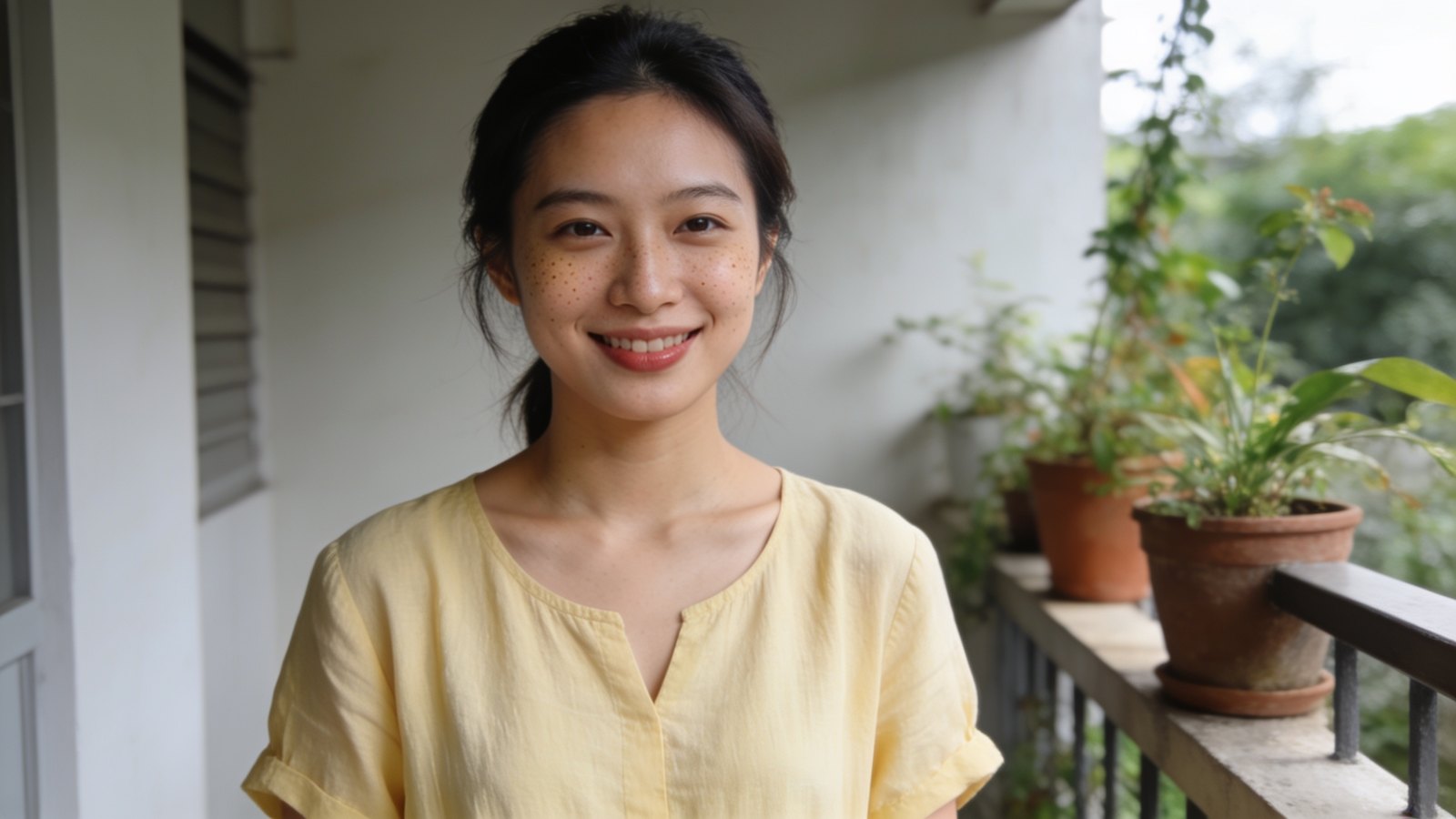
Freckles respond well to pigment laser, and return with sun. Medical Director Dr Sin Yong confirms the diagnosis, sets settings for your skin and plans the sun care that keeps the result.
WhatsApp to Enquire →Key facts ↓Freckles removal in Singapore usually uses a pigment laser, picosecond or Q-switched, applied spot by spot. Many freckles lighten markedly after one to three sessions, with darkening and fine crusts for about a week. Because the tendency to freckle is inherited and triggered by UV, freckles can return with sun, so daily sunscreen and occasional maintenance keep the result. Each spot is checked first.
Freckles (ephelides) are small, flat, light- to mid-brown spots, usually a few millimetres across, scattered over the cheeks, nose, forehead and shoulders. They appear in childhood and are strongly inherited. In a freckle, the number of pigment cells (melanocytes) is normal; what differs is that those cells make more melanin in response to ultraviolet light. That is why freckles darken with sun and fade when exposure drops, and why they return after treatment if the skin keeps seeing sun.
In temperate countries freckles fade in winter. In Singapore, with strong UV all year, many people never see that seasonal fading, and freckles that faded during a stay abroad can darken quickly on returning. The condition itself, how it is diagnosed and how it differs from other spots is covered on freckles: causes and signs. This page is about removal: what can be done, what it can achieve, and how to keep the result.
Freckle removal at IN Eternity Clinic is assessed and planned by Medical Director Dr Sin Yong, with pigment laser at the centre of most plans and sun protection as the part that decides how long the result holds.
| Freckles (ephelides) | Sun spots (solar lentigines) | Melasma | Hori’s naevus | |
|---|---|---|---|---|
| Starts | Childhood | Adulthood, after years of sun | Adulthood, often after pregnancy or hormonal change | Adulthood |
| Look | Many small, light-brown dots | Fewer, larger, darker, sharply edged spots | Patches that blend into the skin | Grey-brown or blue-grey speckles on the cheeks |
| With less sun | Fade | Stay | Lighten slowly | Stay |
| Depth | Surface (epidermis) | Surface (epidermis) | Surface and deeper | Deeper (dermis) |
| Laser response | Good; returns with sun | Good; new spots can form | Cautious; can darken with heat | Slow; several sessions |
The diagnosis changes the plan. Freckles and sun spots respond well to spot treatment with a pigment laser. Melasma can darken after the same settings, and Hori’s naevus needs longer wavelengths and more sessions. A face with freckles may also have early melasma on the cheeks, and treating them identically risks making the melasma worse. A decision guide to telling them apart is in age spots vs freckles vs melasma.
| Option | What it does | Suits | At IN Eternity Clinic |
|---|---|---|---|
| Daily broad-spectrum sunscreen, hat and shade | Prevents freckles darkening and limits new ones | Everyone with freckles; essential with any treatment | Set out at consultation |
| Pico laser spot treatment | Picosecond pulses fragment pigment mainly by pressure, with little heat spread | Defined freckles in most skin types, including skin types III–IV | Pico laser on the DEKA TORO or Fotona StarWalker PQX |
| Q-switched laser spot treatment | Nanosecond pulses fragment pigment mainly by rapid heating | Defined freckles; settings chosen for skin type | Available on the same platforms |
| Laser toning | Low-energy passes over the whole face to even background tone | Many fine freckles with uneven background tone | Laser toning as a supporting course |
| Superficial chemical peel | Speeds shedding of pigmented surface cells | Mild freckling; maintenance | Chemical peels |
| Topical lightening care | Slows pigment production; supports results | Maintenance; mixed pigment | Recommended after assessment; prescription creams only where suitable |
| Intense pulsed light (IPL) | Broad-spectrum light absorbed by pigment | Widely used elsewhere for freckles | General information only; not the method used here |
For most people, pigment laser is the main tool. Freckles sit in the surface layer and contain enough pigment to absorb laser light readily, which is why they often respond within one to three sessions. Randomised split-face comparisons in Asian patients have compared Q-switched laser with IPL for freckles and lentigines, and reviews of picosecond lasers in Asian skin report good clearance of benign pigmented spots with a low rate of lasting side effects. The choice between picosecond and Q-switched pulses, and of wavelength, is made for your skin; pico vs Q-switched vs laser toning explains the differences.

Recovery after spot treatment is mostly cosmetic: the darkened freckles are visible for about a week, and most people work as usual. Normal reactions, uncommon side effects and the aftercare checklist are set out in pico laser side effects and aftercare, and what to expect over the following weeks in the pico laser results timeline.
“Laser can clear the freckles you have. It cannot change the skin that makes them, which is why the sunscreen matters as much as the session.”
The main risk of freckle removal in Singapore is post-inflammatory hyperpigmentation (PIH): a brown darkening that appears two to six weeks after treatment, more often in skin types III to V, after sun exposure, or when more energy was used than the skin needed. It usually fades over weeks to months with sun protection and topical care, but it can take longer than the freckles it replaced.
How pigment is treated by type across the face, including melasma and acne marks, is set out in pigmentation treatment in Singapore.
Often, yes, over time. Laser clears the pigment in the freckles you have, and many people see them lighten markedly after one to three sessions. The skin’s tendency to make freckles in response to sun is inherited and unchanged, so new freckles can appear and treated ones can darken again with sun exposure. In Singapore, that can happen within a season of careless sun.
| What helps results hold | Why |
|---|---|
| Broad-spectrum sunscreen every morning, reapplied outdoors | UV is the trigger for freckle pigment |
| A hat, sunglasses and shade at midday | Sunscreen alone is rarely applied thickly enough |
| Extra care on holiday, on boats and at the beach | Reflected light and long exposure undo results fastest |
| Topical care with ingredients such as vitamin C or niacinamide | Supports a more even tone between sessions |
| A maintenance session when freckles return | Usually quicker than the first course |
General clinical observations used at consultation; they describe what is checked, not any individual result.
Freckles are harmless. Pigment laser should only be used on spots that are clearly benign, because laser removes the pigment that would show what a spot was.
These are referred for assessment before any cosmetic treatment. Moles that need removing are covered in mole removal.

Freckles in children and teenagers are usually managed with sun protection alone: they are expected, harmless and still forming, and new ones appear with every sunny holiday. Laser is generally considered for adults once the pattern is settled, and the decision is made with a parent or guardian for anyone under 21.
Freckles in skin types III to V can be treated, with more care. Energy is lower, a test area is often done first, sessions are spaced further apart, and sun protection is stricter. Sometimes the plan is a gentler course of laser toning rather than spot treatment, accepting slower change in exchange for a lower risk of darkening. Pregnancy and breastfeeding are reasons to postpone laser and focus on sun protection.
Cost depends on how many freckles are treated and over what area, whether the plan is spot treatment, toning or both, the platform and wavelength used, how many sessions are needed, and whether topical care is part of the plan. A few freckles on the nose and cheeks is a different plan from dense freckling across the face and shoulders. Because the plan follows the diagnosis, it is set out after assessment. Factors that drive pigment treatment cost more widely are explained in pigmentation removal cost in Singapore. The consultation fee at IN Eternity Clinic is S$120, waived with any medical treatment.
For most adults, a pigment laser used spot by spot, such as a picosecond or Q-switched laser, lightens freckles markedly in one to three sessions. Daily sun protection afterwards decides how long the result holds, because the tendency to freckle is inherited.
They can. Laser clears existing freckle pigment, but the skin still responds to sun by making freckles, so treated ones can darken and new ones appear with sun exposure. Sunscreen, a hat and shade, and occasional maintenance keep results.
Many people need one to three sessions, about four to six weeks apart. Dense freckling, darker skin types and freckles mixed with other pigment may need more, sometimes with a toning course alongside.
Pico laser is well suited to freckles, which sit in the surface layer. Picosecond pulses break pigment mainly by pressure with less heat spread, which may lower the risk of darkening in Asian skin. Settings are chosen for your skin type.
Treated freckles turn darker for about a week and form fine crusts that lift on their own, with mild redness at first. Most people work as usual. Strict sunscreen is needed for the following weeks.
Creams can lighten freckles a little and help maintain results, but they rarely clear them on their own. Strong lightening creams bought online can contain undeclared or prescription ingredients and should be avoided. Topical care is chosen after assessment.
Most people describe each pulse as a quick flick, like a rubber band. Numbing cream can be used for larger areas. Discomfort lasts only during treatment, with warmth for a short while afterwards.
Freckles start in childhood, are small and light brown, and darken with sun and fade without it. Sun spots appear in adulthood after years of sun, are larger and sharply edged, and stay the same through the year. Both respond to pigment laser.
Often, with care. Freckles can be treated spot by spot while melasma on the cheeks is approached gently with sun protection and topical care. Using strong settings over melasma can darken it, so the plan separates the two.
IN Eternity Clinic, 9 Scotts Road, #12-01 Pacific Plaza, Singapore 228210. By appointment with Medical Director Dr Sin Yong. Monday to Saturday, 11am to 8pm. WhatsApp or call +65 8815 3008. The consultation fee is waived with any medical treatment.
These sources describe mechanisms and general evidence. They are not a promise of any individual result; suitability is decided at an in-person assessment.