DEKA TORO in Singapore
The DEKA TORO at IN Eternity Clinic, a designated DEKA Centre of Excellence: its wavelengths and modes as DEKA describes them, the treatments that use it, and who it may not suit.
WhatsApp to Enquire →Key facts ↓The DEKA TORO is a Q-switched Nd:YAG laser that combines picosecond and nanosecond pulses in three wavelengths, 785 nm, 532 nm and 1064 nm, with a longer thermal mode. At IN Eternity Clinic on Orchard Road it runs T2 Frax Radiance and laser toning, and is used for pigment spots, melasma care and tattoo removal. Settings follow the pigment and skin type.
- Maker and model: TORO, made by DEKA, which describes it as a Q-switched Nd:YAG system combining picosecond and nanosecond emissions in three wavelengths: 785, 532 and 1064 nm [1].
- The 785 nm wavelength: DEKA states it is well absorbed by melanin and less by haemoglobin than 1064 and 532 nm, and positions it for epidermal and dermal lesions in Asian skin types III to V [1].
- Handpieces DEKA lists: Pico 785 nm round spots of 2 to 6 mm, a 2.5 to 8 mm round zoom, square spots of 2 to 7 mm for tattoos, a carbon peel handpiece and 8 and 9 mm fractional handpieces [1].
- Evidence for picosecond lasers: a systematic review of 77 studies rated the evidence for picosecond laser at level I for tattoo removal and level I to IV for benign pigmented lesions [2].
- Asian skin: a meta-analysis of 200 Asian patients graded pigment clearance after picosecond laser as excellent in about 56 in 100 at three months [3].
What is the DEKA TORO?
The DEKA TORO is a pigment laser from DEKA, the Florence-based laser maker, that fires picosecond and nanosecond Q-switched pulses at 785, 532 and 1064 nm.
Most pico lasers are built around one or two wavelengths. DEKA built the TORO on a Q-switched Nd:YAG source and added a 785 nm picosecond wavelength, a near-infrared colour that sits between the 755 nm Alexandrite and the 1064 nm Nd:YAG. DEKA also lists a Thermal-Mode, a longer pulse that warms tissue rather than shattering pigment, which it suggests for skin rejuvenation and active acne [1].
| Feature | What DEKA states | What it means in practice |
|---|---|---|
| Laser source | Q-switched Nd:YAG with picosecond and nanosecond emissions | Two pulse lengths on one platform |
| Wavelengths | 785 nm, 532 nm and 1064 nm | 785 nm for pigment in skin types III to V; 532 nm for surface spots and some ink colours; 1064 nm for deeper pigment, black ink and toning |
| Thermal-Mode | Longer pulse duration, suggested for rejuvenation and active acne | Gentle dermal warming; the “Tighten” half of T2 Frax Radiance |
| Pico 785 nm handpiece | Round spot, 2, 3, 4, 5 or 6 mm | Spot size matched to the lesion |
| Round Zoom | 2.5 to 8 mm, selected by rotating a ring | Suggested by DEKA for pigmented lesions |
| Square handpieces | Six square spots, 2 to 7 mm, with spacers | Even energy across the spot; suggested for tattoos |
| DEKA Peel and fractional round | Carbon peel handpiece; 8 and 9 mm fractional handpieces | Carbon peel rejuvenation; fractional work for texture and acne scars |
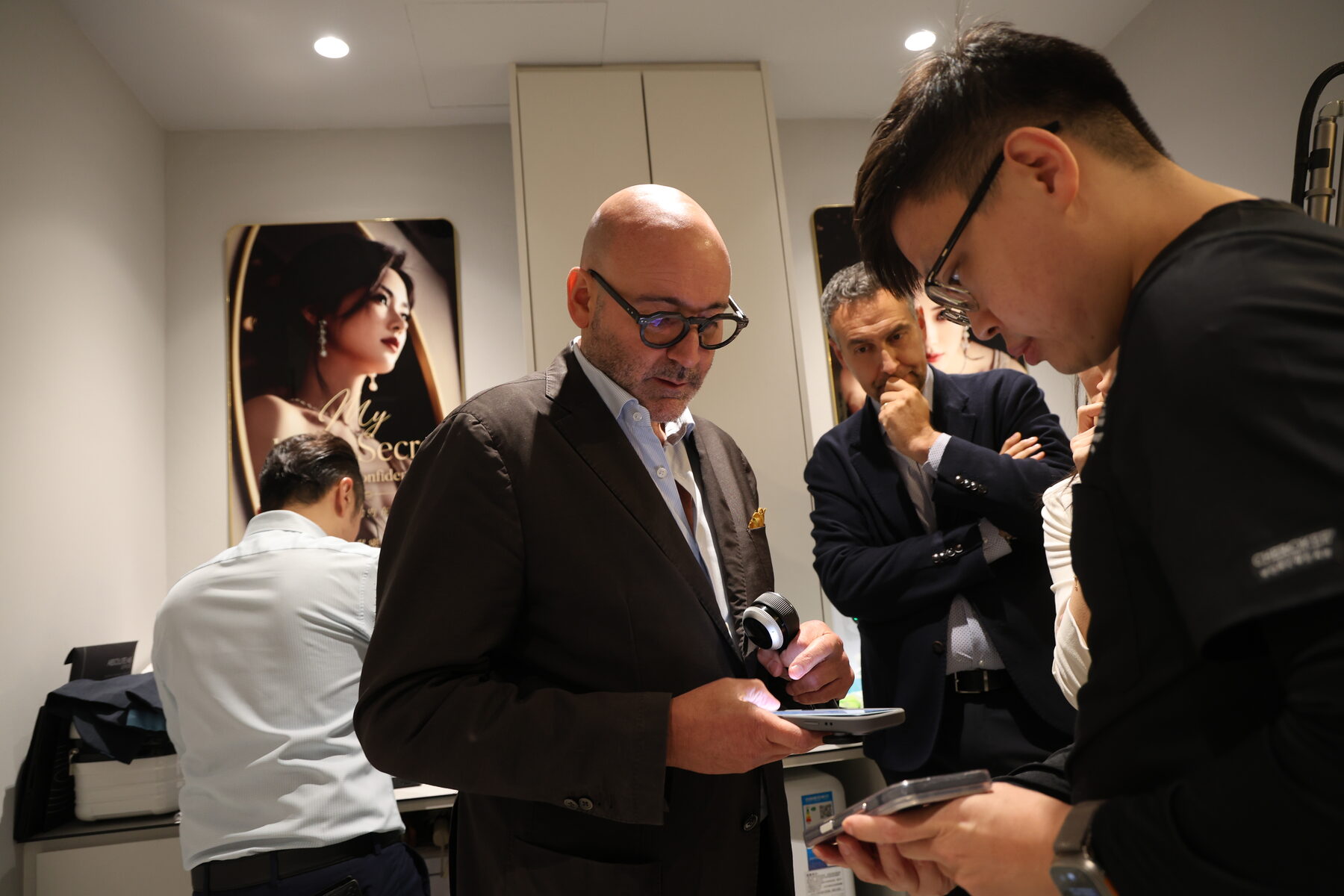
IN Eternity Clinic is a designated DEKA Centre of Excellence (2026), and the TORO is one of the four DEKA platforms in use there. In October 2026 Dr Sin Yong attended DEKA Academy in Florence, where the programme covered the TORO among other DEKA platforms; see DEKA Academy Florence 2026.
How does the TORO break up pigment?
A very short pulse is absorbed by the pigment or ink and shatters it before heat spreads; the body then clears the fragments over the following weeks.
Picosecond pulses are about a thousand times shorter than nanosecond Q-switched pulses. At that speed the effect on a pigment granule is mainly mechanical, a pressure wave, with less heat passing into the surrounding skin. In Asian skin, where heat and inflammation can trigger darkening, less heat is a practical advantage. The 785 nm wavelength is absorbed well by melanin and less by the haemoglobin in blood vessels, according to DEKA, which limits unwanted effects on vessels [1].
The nanosecond outputs keep two established uses. Low-energy Q-switched 1064 nm passes over the whole face are the basis of laser toning in Singapore: many gentle sessions that break up scattered pigment a little at a time. Q-switched 532 nm reaches discrete brown spots in the surface layers and some warm ink colours. The Thermal-Mode works differently again: a longer pulse that warms the dermis to support collagen, which is why it pairs with pigment work in one appointment.
Picosecond laser evidence is strongest for tattoos and benign pigmented lesions [2]. How pulse lengths compare is explained in pico vs Q-switched vs laser toning and pico toning vs laser toning.
Which treatments use the DEKA TORO at IN Eternity Clinic?
T2 Frax Radiance, laser toning, pico laser for pigment, tattoo removal and parts of melasma care run on the TORO, alongside the clinic’s Fotona StarWalker PQX.
| Treatment | What the TORO does there | Read more |
|---|---|---|
| T2 Frax Radiance | IN Eternity Clinic’s own protocol: 785 nm picosecond pulses for pigment (Tone) with a longer thermal pulse that warms dermal collagen (Tighten) in one appointment | T2 Frax Radiance |
| Laser toning | Low-energy 1064 nm Nd:YAG passed evenly over the face for dull, uneven tone and some post-acne marks; cautiously in melasma | laser toning in Singapore |
| Pico laser | Sun spots, freckles, post-acne marks and uneven tone, with the platform chosen per pigment | pico laser in Singapore |
| Tattoo removal | Picosecond and Q-switched wavelengths matched to ink colour and skin type, over a course | tattoo removal in Singapore |
| Melasma care | Gentle low-energy passes as one part of a wider plan with sun protection and medical treatment | melasma treatment in Singapore |
| Freckles, age spots, lip pigment | Spot treatment, often Q-switched 532 nm for surface pigment, after examination | freckles removal, age spot removal, lip pigmentation |
The Fotona StarWalker PQX covers much of the same ground with 1064 and 532 nm and runs the R2 Glow protocol. The TORO’s distinguishing features are the 785 nm picosecond wavelength and the Thermal-Mode, which together make T2 Frax Radiance possible. For most pigment, the type and depth of the pigment decide the platform, and some plans use both.
How does the DEKA TORO differ from other pico lasers?
Its difference is the 785 nm picosecond wavelength plus Q-switched 532 and 1064 nm and a thermal mode, all on one platform.
| Feature | DEKA TORO | Fotona StarWalker PQX |
|---|---|---|
| Pulse types | Picosecond and nanosecond (Q-switched) | Picosecond and Q-switched (nanosecond) |
| Wavelengths stated by the maker | 785 nm, 532 nm and 1064 nm | 1064 nm and 532 nm |
| Extra modes | Thermal-Mode; fractional round handpieces; carbon peel handpiece | FracTAT, FRAC3; Er:YAG SMOOTH and TURBO |
| Maker’s stated applications | Benign pigmented lesions, tattoos, toning, carbon peel, rejuvenation, acne scars, melasma | Tattoos, pigmented lesions, toning, photorejuvenation, scar revision and resurfacing |
| Protocol at IN Eternity | T2 Frax Radiance; laser toning | R2 Glow |
A laser that offers only picosecond pulses cannot run classic Q-switched toning; one that offers only Q-switched pulses lacks the picosecond option for fine pigment and resistant ink. Other picosecond brands are built around 755 nm or 1064 and 532 nm; a factual comparison is in PicoSure vs PicoWay vs StarWalker vs TORO.
More wavelengths do not mean better results. Each one suits particular targets, and what matters is whether the wavelength fits your pigment. The guide to pigmentation types in Asian skin explains how each type is approached.
Is the DEKA TORO suitable for Asian skin?
DEKA positions its 785 nm wavelength for Asian skin types III to V, but darkening after laser remains the main risk, so energy and spacing are planned around it.
Brown skin protects itself from heat and inflammation by making more pigment. A setting that suits fair skin can leave a brown mark on Asian skin, and Singapore’s sun and humidity make aftercare harder. Picosecond pulses spread less heat, and studies of picosecond laser in Asian patients report most pigment cases graded good or excellent at three months [3]; individual results vary.
- Pigment is typed first: sun spots, freckles, melasma, Hori’s naevus and post-acne marks each respond differently.
- Test spots are used where the response is uncertain, such as a history of darkening after treatment.
- Toning is kept gentle and spaced; too much energy, too often, can leave tone more uneven, including pale patches.
- Sunscreen, shade and a hat are part of the plan, both ahead of treatment and afterwards.
What is normal after treatment, and what is not, is covered in pico laser side effects.
Who may not suit treatment on the DEKA TORO?
Treatment usually waits for anyone with an unexamined changing spot, a fresh tan, active infection or eczema in the area, or pregnancy.
- A new, changing or irregular spot. It is examined first, because laser would remove what a biopsy needs; see mole check before removal.
- A fresh tan or recent sunburn. The tan is allowed to fade before treatment.
- Active acne cysts, infection, cold sores or eczema in the treatment area are settled first.
- Pregnancy or breastfeeding. Elective laser is usually postponed; see pregnancy and breastfeeding safety.
- Melasma that is flaring with sun, heat or hormones may need medical treatment and protection before any laser.
- Cosmetic tattoos in white, flesh or some red inks can darken with short-pulse lasers, so a test area comes first.
- Expecting one session to finish the job for tattoos or melasma; both usually need a course, and melasma can return.
Where the TORO is not the right tool, Dr Sin Yong says so; the answer may be another laser, a peel, medical treatment or no treatment.
What Dr Sin Yong checks before using the DEKA TORO
- What the pigment is and how deep it sits, including whether melasma or Hori’s naevus is part of the picture.
- Your skin type, recent sun exposure and any history of darkening or pale patches after laser.
- Spots that should be examined before any laser.
- For tattoos: ink colours, age, density, layering and whether it is a cosmetic tattoo.
- Whether the Thermal-Mode adds anything for your skin, or whether pigment work alone is enough.
- Your plans for sun, travel and events in the weeks after treatment.
General clinical observations used at consultation; they describe what is checked, not any individual result.
What happens at a DEKA TORO session?
After assessment, cleansing and eye protection, gentle toning passes or targeted spot and tattoo pulses are delivered; most sessions take from a few minutes to around half an hour.
- Assessment. Dr Sin Yong types the pigment or reviews the tattoo, checks skin type and sun exposure, and agrees a plan with a likely number of sessions.
- Preparation. Make-up is removed and consented photographs taken. Numbing cream can be used for spot and tattoo work.
- Eye protection. Laser shields or goggles stay on throughout.
- Treatment. Toning covers the face evenly with a large spot; spots and tattoos are treated individually. In T2 Frax Radiance the thermal pulse follows the pigment passes.
- Straight after. Toning usually leaves redness for a few hours. Treated spots darken and may crust finely for about a week; tattoos may whiten briefly and swell.
- Review. Sessions are spaced weeks apart so fragments can clear and any reaction can settle before the next.
A day-by-day guide is in pico laser downtime.
Where can I have DEKA TORO treatment in Singapore?
The TORO is used at IN Eternity Clinic, 9 Scotts Road, #12-01 Pacific Plaza, Singapore 228210, near Orchard MRT, after a consultation with Medical Director Dr Sin Yong.
The clinic was designated a DEKA Centre of Excellence on 24 July 2026 by DEKA and its Asia-Pacific distributor NeoAsia, and DEKA is among the device makers that have invited Dr Sin Yong to share his clinical expertise internationally. That is a professional relationship; it does not change how your treatment is chosen or promise any result.
You can check how medical devices are registered in Singapore in HSA registration explained. Fees depend on the treatment, the area and the number of sessions and are given in writing after assessment; see fees. Every device at the clinic is described in aesthetic devices at IN Eternity Clinic.
“Pico is a pulse length, not a diagnosis. I decide what the pigment is first, then the wavelength, and sometimes the answer is no laser at all.”
Frequently asked questions
Is the DEKA TORO available in Singapore?
Yes. The DEKA TORO is available at IN Eternity Clinic, 9 Scotts Road, #12-01 Pacific Plaza, Singapore 228210, a designated DEKA Centre of Excellence. Dr Sin Yong uses it for T2 Frax Radiance, laser toning, pigment and tattoo removal. Treatment follows a consultation, where he decides whether it, or the Fotona StarWalker PQX, suits your concern.
Is the DEKA TORO a pico laser?
Partly. DEKA describes the TORO as a Q-switched Nd:YAG system that combines picosecond and nanosecond emissions in three wavelengths: 785, 532 and 1064 nm. The 785 nm output is picosecond; the 532 and 1064 nm outputs are used for Q-switched work such as laser toning and surface spots. A longer thermal mode is also available.
What is the 785 nm wavelength used for?
DEKA positions 785 nm for pigmented lesions in the epidermis and dermis of Asian skin types III to V, because melanin absorbs it well while blood vessels absorb it less than 532 or 1064 nm. At IN Eternity Clinic it is the pigment half of T2 Frax Radiance and is used for spots and post-acne marks.
What is T2 Frax Radiance?
T2 Frax Radiance is IN Eternity Clinic’s own protocol on the TORO. One appointment combines 785 nm picosecond pulses that break up pigment with a longer thermal pulse that warms dermal collagen. The balance between the two is set by Dr Sin Yong for your skin rather than fixed by a package.
Does DEKA TORO treatment hurt?
Toning usually feels like warm snapping; spot and tattoo work like quick rubber-band flicks, which numbing cream can soften. The thermal pulse feels like gentle heat. Settings can be adjusted during the session, and cooling helps afterwards.
How many DEKA TORO sessions will I need?
It depends on the concern. Discrete spots may need one to three sessions; toning and melasma care are given as a course; tattoos need several sessions spaced weeks apart, depending on ink and depth. A likely range is given at assessment and reviewed as you respond.
What is the downtime after DEKA TORO treatment?
Toning usually leaves redness for a few hours. Spots darken and may form fine crusts that flake off over about a week. Tattoo work can cause brief whitening, swelling and occasionally blistering. Sun protection matters throughout, because Asian skin can darken after laser.
DEKA TORO or Fotona StarWalker PQX: which is better?
Neither is better in general. Both deliver picosecond and Q-switched pulses; the TORO adds 785 nm and a thermal mode, and the StarWalker PQX adds Fotona’s fractional and Er:YAG modes. Dr Sin Yong chooses the one whose wavelength and mode fit your pigment, and some plans use both.
Book an assessment
IN Eternity Clinic, 9 Scotts Road, #12-01 Pacific Plaza, Singapore 228210. By appointment with Medical Director Dr Sin Yong. Monday to Saturday, 11am to 8pm. WhatsApp or call +65 8815 3008. At IN Eternity Clinic a consultation fee applies, and it is waived if you go ahead with any medical treatment; the fee is S$120.
International KOL — CLASSYS · HIRONIC · DEKA · ALMA · FOTONA · LUTRONIC
References
- DEKA. TORO, product page (dekalaser.com), 2026. Read 28 October 2026. dekalaser.com
- Wu DC, Goldman MP, Wat H, Chan HHL. A systematic review of picosecond laser in dermatology: evidence and recommendations. Lasers Surg Med 2021;53(1):9-49 (online 2020). doi:10.1002/lsm.23244
- Dong W, Wang N, Yuan X, et al. Treatment of pigmentary disorders using picosecond laser in Asian patients: a meta-analysis and systematic review. Dermatol Ther 2021;34(1):e14709 (online 2020). doi:10.1111/dth.14709
These sources describe mechanisms and general evidence. They are not a promise of any individual result; suitability is decided at an in-person assessment.