Is Tattoo Removal Painful? What It Feels Like and How It Is Eased
Medical Director Dr Sin Yong explains what laser tattoo removal feels like, which areas are most sensitive, and how cooling, numbing and pacing are used.
WhatsApp to Enquire →Key facts ↓Laser tattoo removal is uncomfortable rather than unbearable for most people: quick, hot snaps like a rubber band, strongest over bone and dense ink. Cooling, numbing cream and short sessions ease it.
- The sharp part is brief: in a prospective picosecond study, pain resolved straight after treatment, while swelling and blistering settled within a week [1].
- Local anaesthetic for delicate areas: in 76 eyebrow and eyeliner removals, local anaesthesia was typically used and did not appear to affect outcomes [2].
- Older courses were long and painful: researchers describing picosecond treatment of blue and green ink noted that, with earlier devices, courses were often painful and prolonged [3].
- Fewer sessions, fewer sittings: a 2026 review of 130 patients reported a median of 3 picosecond sessions against 4 Q-switched [4].
- Hands and feet score high: the Kirby-Desai scale gives the hands, feet and lower limbs the highest location score, 5, reflecting slower clearance in areas that are also often more sensitive [5].
Is tattoo removal painful?
It is uncomfortable, and most people describe it as quick, sharp snaps with heat. It is brief, and it can be eased with cooling and numbing.
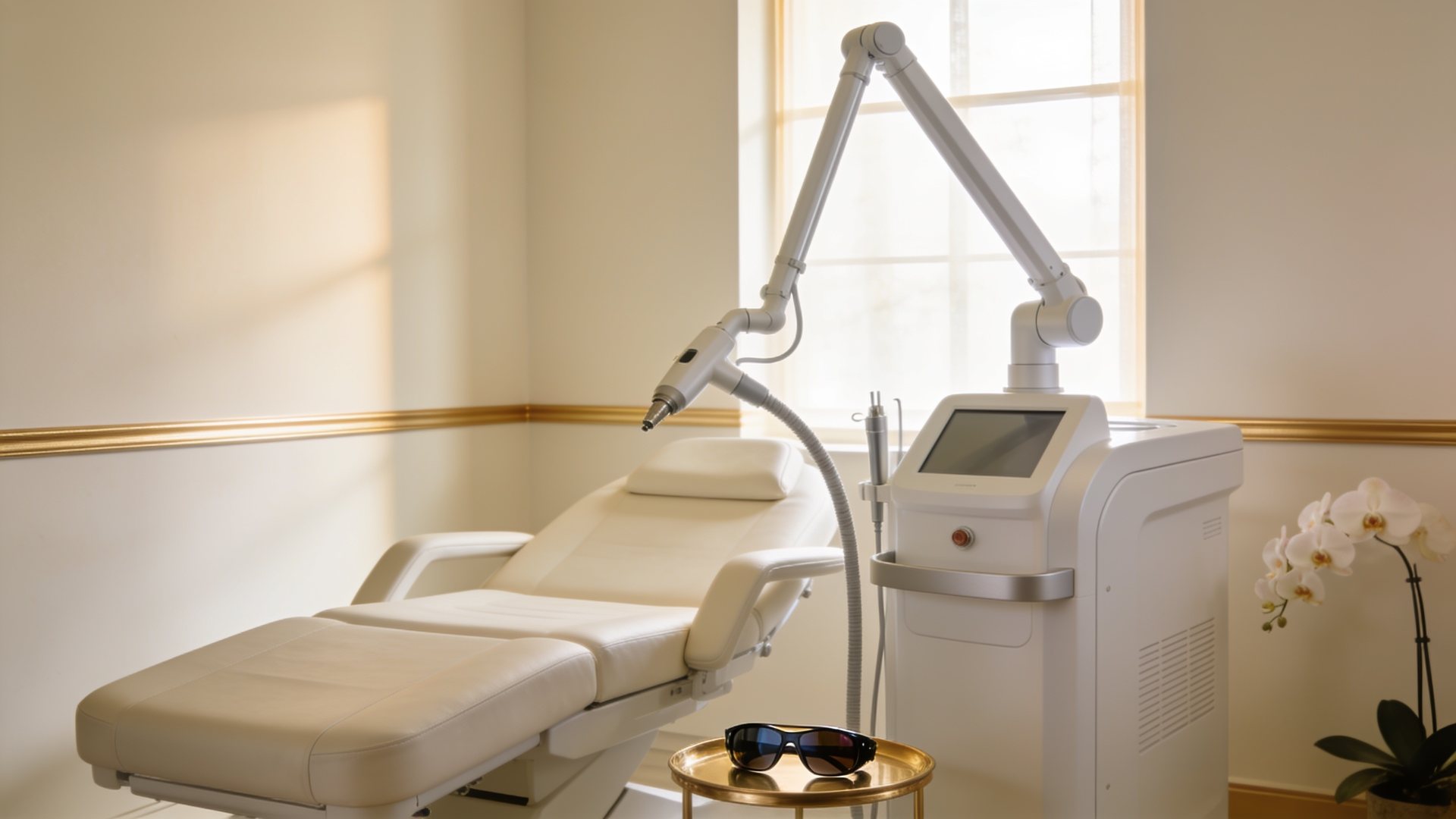
How much it hurts depends on where the tattoo is, how dense the ink is, the settings and your own sensitivity. A small tattoo may take only a few minutes. This page covers comfort only; the treatment as a whole is described on tattoo removal in Singapore. At IN Eternity Clinic tattoos are treated on the DEKA TORO, which Dr Sin Yong uses for “T2 laser tattoo removal”, or the Fotona StarWalker PQX, with cold air cooling throughout and numbing cream available beforehand.
What does laser tattoo removal feel like?
Like a rubber band snapped against the skin, or hot pinpricks, repeated quickly. Afterwards the area stings and feels warm, like sunburn, for a few hours.
Each pulse lasts a fraction of a second. You may hear a small crack as the ink absorbs it and see the ink turn white. The sensation is sharpest on the first pass over dense black ink, and many people find the first minute the hardest before they get used to the rhythm. After treatment, warmth and stinging usually ease over a few hours; a cold compress helps.
Which tattoo locations hurt most to remove?
Areas with thin skin over bone or many nerve endings: ribs, ankles, feet, wrists, hands, spine and collarbone. Upper arms, thighs and the outer shoulder usually hurt less.
| Area | Usual sensation | Why |
|---|---|---|
| Ribs, sternum, collarbone | Sharp, intense | Thin skin over bone |
| Ankles, feet, tops of hands, fingers | Sharp; often the most uncomfortable | Thin skin, bone, many nerve endings |
| Wrist, inner elbow, inner arm | Moderate to sharp | Thin, sensitive skin |
| Spine, neck | Moderate to sharp | Bone close to the surface |
| Upper arm, outer shoulder, thigh, calf | Moderate | Thicker skin and soft tissue |
| Eyebrows, eyelids, lips | Sharp but very brief | Small, sensitive areas; local anaesthetic often used |
Location also affects how many sessions are needed: the hands, feet and lower limbs score highest on the Kirby-Desai scale [5], so the most sensitive areas are also often the slowest.
Does tattoo removal hurt more than getting the tattoo?
Many people say each moment is sharper, but it is over far faster: minutes rather than hours, and spread over sessions weeks apart.
Getting a tattoo is a long, scratching discomfort; removal is short, intense snaps. Because the sessions are brief and cooling runs throughout, most people manage without stopping, and breaks are always possible. The healing afterwards, with blisters and crusts, is often more noticeable than the session itself, and is covered step by step in the aftercare guide.
How is pain managed during tattoo removal?
With cold air cooling during treatment, numbing cream beforehand for larger or sensitive tattoos, short sessions, breaks, and local anaesthetic for small delicate areas where the doctor advises it.
| Option | How it helps | Notes |
|---|---|---|
| Cold air cooling | Numbs the surface and draws heat away during each pass | Used throughout at IN Eternity Clinic |
| Numbing cream | Dulls the skin surface before treatment | Applied beforehand for larger or sensitive tattoos; needs time to work |
| Local anaesthetic injection | Blocks sensation in a small area | Considered for small, sensitive sites such as brows and lips, at the doctor’s discretion |
| Anaesthetic eye drops | Allow an eye shield to be placed | Only for eyeliner work |
| Pacing and breaks | Short rests between passes | Just say so; settings and pace can change |
| Treating in sections | Smaller area per visit | Used for large tattoos; see small vs large tattoo removal |
| Cold compress afterwards | Eases stinging and swelling | Wrapped in a cloth, about 10 minutes at a time |
Numbing products are medicines: only the amount and area advised should be used, because applying too much over a large area can be harmful. Do not buy strong numbing creams online to use before your session without advice.
Can tattoo removal be done with no discomfort at all?
Not entirely. No laser tattoo removal is free of sensation, but numbing and cooling can reduce it to a level most people find manageable.
Claims of a completely comfortable treatment usually mean numbing was used. Numbing cream reduces surface sensation but not deep heat completely; local anaesthetic numbs a small area more fully but needs injections. If you are anxious, say so at the consultation; the plan can start with a small area so you know what to expect.
Does tattoo removal hurt less with each session?
Usually, yes. As ink clears, there is less ink to absorb the energy, so the snaps tend to soften, and most people also know what to expect.
The first session over dense, dark ink is usually the most intense. Later sessions on faded ink are often noticeably milder. Darkened or newly unmasked colours can make one session feel sharper again.
Does pico laser hurt less than Q-switched?
Often a little, because picosecond pulses put less heat into the skin. The bigger difference is that fewer sessions may be needed.
Researchers describing picosecond treatment of blue and green ink noted that, with earlier devices, courses were often painful and prolonged [3]. In a picosecond study, pain resolved straight after treatment [1]. Picosecond tattoo removal has level I evidence [6], and a 2026 review reported a median of one session fewer than Q-switched [4]. See picosecond vs Q-switched tattoo removal.
“I would rather you tell me it hurts than sit through it bravely. Settings, cooling, numbing and pace can all change, and the session does not need to be endured to work.”
How can you make a tattoo removal session more comfortable?
Arrive rested and fed, skip alcohol the night before, wear loose clothing, avoid tanning the area, and tell the clinic if you are anxious or sensitive.
- Eat beforehand; low blood sugar makes discomfort and light-headedness worse.
- Avoid alcohol the night before, which can increase bruising and sensitivity.
- Mention any blood-thinning medicines or supplements; do not stop prescribed medicines without your doctor’s advice.
- Ask a pharmacist or the clinic before taking any painkiller beforehand, as some can increase bruising.
- Wear loose clothing over the tattoo; the area will be warm and may be dressed.
- Keep the tattoo out of the sun; tanned or sunburnt skin is more sensitive and may be postponed.
What Dr Sin Yong looks for
- Where the tattoo is, and how sensitive that area is likely to be.
- How dense and dark the ink is, which shapes how the first session feels.
- Whether numbing cream, local anaesthetic or treating in sections suits you.
- Anything that changes how numbing should be used, such as allergies or other medicines.
- How the last session felt, so settings and pace can be adjusted.
- Anxiety about treatment, which is planned for rather than ignored.
General clinical observations used at consultation; they describe what is checked, not any individual result.
When is pain after tattoo removal a warning sign?
Pain should ease within hours and keep easing. Pain that increases after the first two days, or comes with spreading redness, pus or fever, needs checking.
- Pain that worsens from day two onwards rather than settling.
- Spreading redness, warmth, pus or fever: possible infection.
- A large, tense, very painful blister.
- Eye pain, blurred vision or light sensitivity after brow or eyeliner work: call straight away; go to an emergency department or call 995 if vision is affected.
IN Eternity Clinic patients: WhatsApp or call +65 8815 3008. Healing advice is in tattoo removal aftercare.
Frequently asked questions
Does laser tattoo removal hurt?
Yes, to a degree. Most people describe quick, hot snaps like a rubber band. It is brief, and cooling and numbing cream make it manageable for most people.
Is there tattoo removal without any pain?
No method is entirely free of sensation. Numbing cream, cooling and, for small areas, local anaesthetic can reduce it considerably.
How long does numbing cream take to work before tattoo removal?
It needs time on the skin before treatment, usually around half an hour to an hour depending on the product and area. The clinic advises how and when to apply it.
Which hurts more, tattoo removal or getting a tattoo?
Removal is usually sharper moment to moment but much shorter: minutes rather than hours.
How long does it hurt after tattoo removal?
Stinging and warmth usually ease within a few hours. Tenderness can last a day or two, especially if blisters form.
Is eyebrow tattoo removal painful?
It is sharp but brief, and local anaesthetic is often used for brows and lids. See eyebrow tattoo removal in Singapore.
Can I take a painkiller before tattoo removal?
Ask first. Some painkillers can increase bruising. Do not stop prescribed medicines without your doctor’s advice.
Book an assessment
IN Eternity Clinic, 9 Scotts Road, #12-01 Pacific Plaza, Singapore 228210. By appointment with Medical Director Dr Sin Yong. Monday to Saturday, 11am to 8pm. WhatsApp or call +65 8815 3008. At IN Eternity Clinic a consultation fee applies, and it is waived if you go ahead with any medical treatment; the fee is S$120.
International KOL — CLASSYS · HIRONIC · DEKA · ALMA · FOTONA · LUTRONIC
References
- Saedi N, et al. Treatment of tattoos with a picosecond alexandrite laser: a prospective trial. Arch Dermatol 2012;148(12):1360-1363. doi:10.1001/archdermatol.2012.2894
- Kream E, Jairath N, Bajaj S, Orbuch D, Wang JV, Geronemus RG. Laser removal of eyeliner and eyebrow tattoos: chart review, experiences, and learnings. J Clin Aesthet Dermatol 2023;16(11):47-49. jcadonline.com
- Brauer JA, et al. Successful and rapid treatment of blue and green tattoo pigment with a novel picosecond laser. Arch Dermatol 2012;148(7):820-823. doi:10.1001/archdermatol.2012.901
- Chen et al. Q-switched 1064-nm laser versus picosecond 1064-nm laser in tattoo removal […]. J Cosmet Dermatol 2026. doi:10.1111/jocd.71098
- Kirby W, Desai A, Desai T, Kartono F, Patel G. The Kirby-Desai scale: a proposed scale to assess tattoo-removal treatments. J Clin Aesthet Dermatol 2009;2(3):32-37. PMC2923953
- Wu DC, Goldman MP, Wat H, Chan HHL. A systematic review of picosecond laser in dermatology: evidence and recommendations. Lasers Surg Med 2021;53(1):9-49 (online 2020). doi:10.1002/lsm.23244
These sources describe mechanisms and general evidence. They are not a promise of any individual result; suitability is decided at an in-person assessment.