
Pico Laser for Pigmentation in Singapore
Pigmentation is not one problem, so it is not one laser setting. At IN Eternity Clinic your pigment is typed first — sun spot, freckle, melasma or post-inflammatory — and then treated on picosecond platforms chosen for Asian skin, by Medical Director Dr Sin Yong.
- Doctor-performed
- DEKA Centre of Excellence
- Fotona StarWalker PQX & DEKA TORO
- Planned for Asian skin
Assessment with Dr Sin Yong · Mon–Sat 11am–8pm · Pacific Plaza, 9 Scotts Road
The short answer
Is pico laser the right treatment for my pigmentation?
Often, but only after the pigment is identified. A picosecond laser fires pulses lasting trillionths of a second, which break pigment mainly through a pressure (photoacoustic) effect rather than heat, so less heat reaches the surrounding skin — the main reason it is favoured for Asian skin. Freckles and sun spots usually respond well in a few sessions. Melasma is managed rather than cured: it is treated gently over a longer series, alongside sun protection and skin care, because aggressive laser can make it worse. At IN Eternity Clinic every plan is set by Dr Sin Yong after examining the skin.
What we treat
Four kinds of pigment, four different plans
The most common reason pigmentation treatment disappoints is that different pigment types are treated as if they were the same. These are the patterns seen most often in Singapore clinics, and how each is approached.
Sun spots (solar lentigines)
Flat brown marks on the cheeks, temples and hands from cumulative UV. Usually well defined and epidermal, so they tend to clear in one to three targeted sessions, with a short darkening-and-flaking phase.
Freckles
Small scattered spots that darken with sun. They respond readily to picosecond laser, but new freckles appear if sun exposure continues, so protection is part of the plan.
Melasma
Symmetrical patches on the cheeks, forehead or upper lip, driven by hormones, UV, heat and visible light. Treated conservatively with low-energy sessions and skin care; the goal is control, not a one-off clearance.
Post-inflammatory pigmentation (PIH)
Darkening left behind after acne, eczema, burns or aggressive treatments. Common in Asian skin. Topical care comes first; laser is added carefully for marks that persist.
Dermal pigment (e.g. Hori’s nevus)
Grey-brown pigment sitting deeper in the skin, often on the cheekbones. Needs longer wavelengths and more sessions, and is identified at examination rather than guessed.
Dull, uneven tone
Diffuse unevenness without a single cause. Gentle picosecond toning can brighten overall tone as part of a broader skin-quality plan.
Key facts
Eight things worth knowing before pico laser
- Pulse length changes the mechanismPicosecond pulses are about a thousand times shorter than the nanoseconds of older Q-switched lasers, so pigment is shattered mainly by pressure (photoacoustic effect) rather than by heat.
- Smaller fragments, less heatFiner pigment particles are cleared more readily by the skin’s own immune cells, and less heat spreads to the surrounding skin.
- Heat matters most in Asian skinIn Fitzpatrick III–IV skin, excess heat can trigger post-inflammatory hyperpigmentation, which is why pulse duration and energy are chosen conservatively.
- Head-to-head evidence in AsiansIn a randomised split-face trial of solar lentigines in Asian patients, a 532 nm picosecond laser cleared more pigment than a Q-switched laser, with PIH in 5% of picosecond sides versus 30% of Q-switched sides.
- Pooled outcomesA meta-analysis of 200 Asian patients treated with picosecond lasers for pigmentary disorders reported 56% rated excellent and 29% good at three months.
- Melasma is managed, not curedMelasma behaves like a chronic, photo-aggravated condition with changes in the deeper skin, so it tends to recur and needs maintenance and sun protection.
- Laser is second line for PIHFor post-inflammatory hyperpigmentation in skin of colour, reviews place lasers after topical treatment, as an adjunct for resistant marks.
- Wavelength follows pigment depthShorter wavelengths (532 nm) suit superficial brown spots; longer wavelengths (785–1064 nm) reach deeper pigment and are gentler on the skin surface.
I do not chase melasma with heat. The question is never how strong the laser is — it is what kind of pigment you have, and how much your skin will tolerate before it answers back with more.
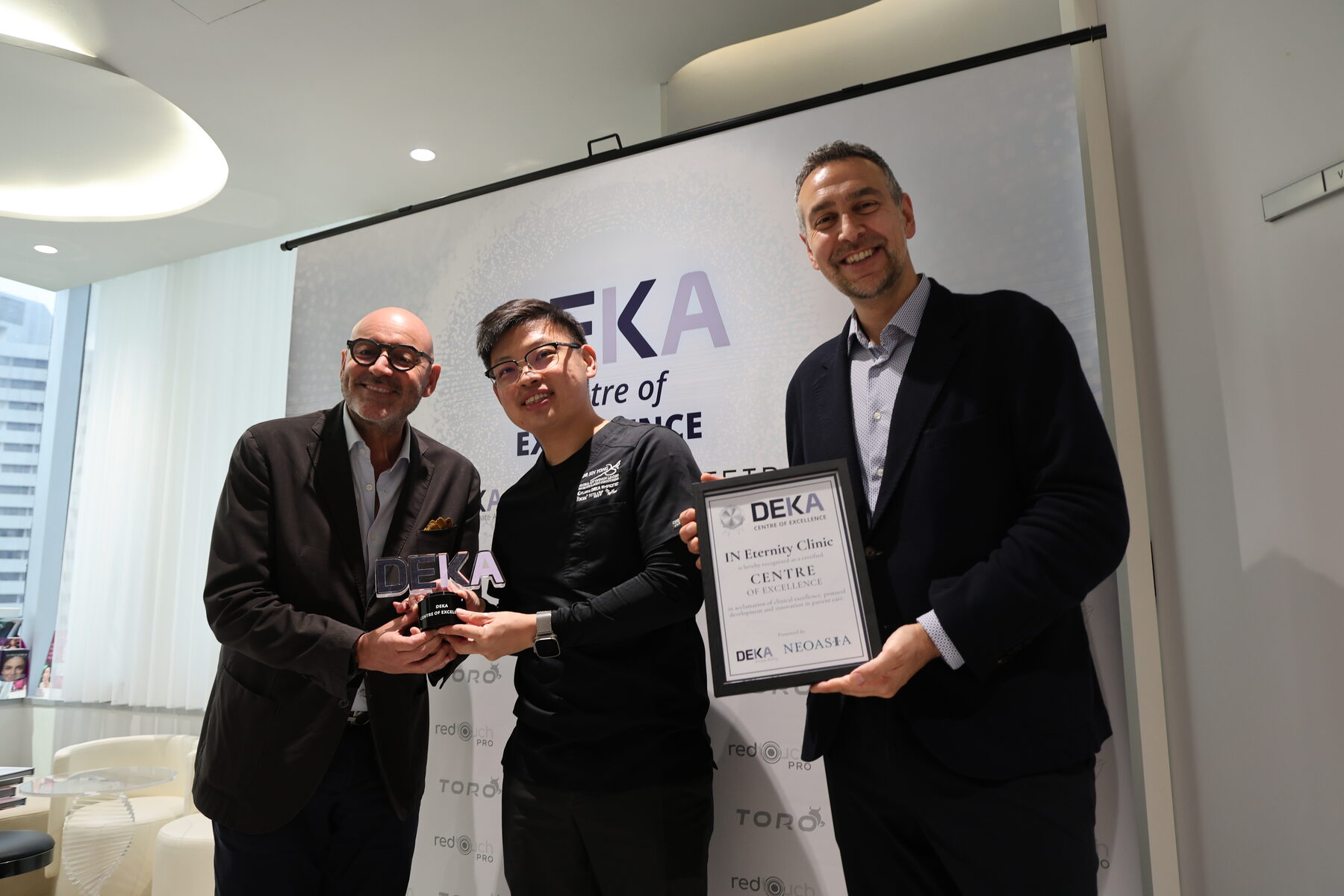
IN Eternity Clinic was designated a DEKA Centre of Excellence by DEKA and NeoAsia in July 2026.
Who treats you
Assessed and treated by Medical Director Dr Sin Yong
Dr Sin Yong examines the pigment himself, decides whether laser is appropriate at all, and selects the platform, wavelength and energy for your skin. IN Eternity Clinic is a designated DEKA Centre of Excellence, and Dr Sin Yong is an International Key Opinion Leader for DEKA and FOTONA, regularly invited to share his clinical expertise on laser treatment of Asian skin.
- MBBS, National University of Singapore
- MRCS, Royal College of Surgeons of Edinburgh
- MSc Aesthetic Medicine, University of London
- MSc Practical Dermatology, Cardiff University
International Key Opinion Leader · CLASSYS · HIRONIC · DEKA · ALMA · FOTONA · LUTRONIC
How it works at IN Eternity
From first message to clearer skin
WhatsApp us
Send a message (and photos in natural light if you like). Our team will arrange an assessment slot at Pacific Plaza.
Pigment assessment
Dr Sin Yong examines the skin under magnification to type the pigment — epidermal, dermal, hormonal or post-inflammatory — and checks for anything that should not be lasered.
Your plan
Platform, wavelength, number of sessions and home care are agreed, with costs explained before anything is done. A test area may be advised for sensitive skin.
Treatment and review
Sessions take about 20–30 minutes. Progress is reviewed between sessions and settings adjusted to how your skin responds.
Pico vs other options
Pico laser compared with Q-switched laser and IPL
Patients often ask which device is “best”. Each has a role; the choice depends on the pigment and the skin carrying it.
| Picosecond laser | Q-switched (nanosecond) laser | IPL (intense pulsed light) | |
|---|---|---|---|
| Pulse duration | Picoseconds (10-12 s) | Nanoseconds (10-9 s) | Milliseconds, broad spectrum |
| Main action | Photoacoustic — pigment shattered by pressure | Photothermal and photomechanical | Photothermal (heat) |
| Heat to surrounding skin | Lowest | Moderate | Higher |
| Typical role | Sun spots, freckles, deeper pigment, gentle toning | Sun spots, freckles, toning | Diffuse sun damage and redness in lighter skin |
| Asian-skin consideration | Favoured where PIH risk is a concern | Effective; PIH risk higher in some studies | Used cautiously in darker skin types |
Summary based on the references below. Device choice at IN Eternity Clinic is made at assessment.
The technology
Two picosecond platforms, chosen per pigment
StarWalker PQX
Picosecond and Q-switched modes with 1064, 532, 585 and 650 nm wavelengths, giving options for superficial brown spots through to deeper pigment, plus FracTAT and fractional modes.
DEKA TORO
Picosecond 785 nm alongside nanosecond 1064 and 532 nm. The 785 nm wavelength sits between classic options and is used at IN Eternity for tone and pigment in Asian skin (see T2 Frax Radiance).
What to expect
Sessions, downtime and results
| Session length | About 20–30 minutes, including skin preparation and cooling |
| Comfort | Described as a quick snapping or warm prickling; numbing cream can be used |
| Downtime | Mild redness for a few hours to a day. Treated spots may darken and flake over 5–10 days |
| Number of sessions | Sun spots and freckles: often 1–3. Melasma and toning: a longer series of gentle sessions, then maintenance |
| Interval | Usually 2–4 weeks for toning; 4–8 weeks for targeted spot treatment |
| When results show | Gradually over 2–6 weeks after each session as fragments are cleared |
| Aftercare | Daily broad-spectrum sunscreen, gentle skin care, no scrubs or picking for a week |
Typical ranges only. Your own plan, number of sessions and cost are set at consultation after assessment.
Suitability & safety
Who pico laser suits — and when we wait
Usually a good fit
- Sun spots, freckles and age spots on the face or hands
- Melasma, as part of a gentle, long-term management plan
- Persistent post-inflammatory marks after acne
- Dull or uneven tone in Asian skin types
- Patients able to use daily sun protection
Treated with caution or deferred
- Pregnancy (treatment is usually deferred)
- Active infection, cold sores or open wounds in the area
- A pigmented lesion that is changing, irregular or bleeding — examined first, not lasered
- Recent heavy tanning or planned intense sun exposure
- Use of photosensitising medication, reviewed at consultation
Possible effects include temporary redness, swelling, darkening of treated spots and, less commonly, post-inflammatory pigmentation or lightening. These are discussed at your assessment.
Questions patients ask
Pico laser pigmentation FAQ
Does pico laser work for melasma?
Pico laser can help lighten melasma when used gently as part of a wider plan with sun protection and skin care, but melasma is a chronic condition that tends to recur. It is managed over time rather than cured, and aggressive settings can make it worse.
How many pico laser sessions will I need?
Sun spots and freckles often need one to three sessions. Melasma, post-inflammatory marks and overall toning usually need a longer series of gentle sessions spaced two to four weeks apart, followed by maintenance. Your number is set after assessment.
What is the downtime after pico laser?
Most people have mild redness for a few hours to a day. Treated spots may darken and flake over about five to ten days. Make-up can usually be worn the next day.
Is pico laser safe for Asian skin?
Picosecond lasers deliver less heat to the surrounding skin than older lasers, which lowers the risk of post-inflammatory pigmentation in Asian skin. Safety still depends on correct pigment diagnosis, conservative settings and sun protection.
What is the difference between pico laser and Q-switched laser?
Pico lasers use pulses a thousand times shorter than Q-switched lasers, shattering pigment mainly by pressure rather than heat. In an Asian split-face trial on sun spots, pico cleared more pigment with less post-inflammatory pigmentation.
Will my pigmentation come back?
Sun spots and freckles removed by laser do not return at the same spot, but new ones can form with sun exposure. Melasma often recurs because of hormones, UV and heat, which is why maintenance and sunscreen matter.
Does pico laser hurt?
It feels like quick snapping or warm prickling. Numbing cream can be applied beforehand, and sessions are short.
How much does pico laser cost in Singapore?
Cost depends on the pigment type, the area and the number of sessions needed, so IN Eternity Clinic confirms the plan and cost at consultation before treatment begins.
Who performs the treatment?
Every assessment at IN Eternity Clinic is carried out by Medical Director Dr Sin Yong, who sets the platform, wavelength and energy for your skin.
Book your assessment
Find out what your pigment actually is
A short assessment with Dr Sin Yong tells you which pigment you have, whether pico laser is the right tool, and roughly how many sessions to expect. WhatsApp us to arrange a time.
WhatsApp +65 8815 3008IN Eternity Clinic · 9 Scotts Road, #12-01 Pacific Plaza, Singapore 228210 · Mon–Sat 11am–8pm · [email protected]
Related at IN Eternity
References
- Dong W, et al. Treatment of pigmentary disorders using picosecond laser in Asian patients: a meta-analysis and systematic review. Dermatol Ther. 2021. PubMed 33368885
- Torbeck RL, et al. Evolution of the picosecond laser: a review of literature. Dermatol Surg. 2019. PubMed 30702447
- Kim JY, et al. Split-face randomized comparison of 532 nm picosecond Nd:YAG versus 532 nm Q-switched Nd:YAG laser for solar lentigines in Asians. Ann Dermatol. 2020. PubMed 33911703
- Jo JY, et al. Update on melasma treatments. Ann Dermatol. 2024. PubMed 38816973
- Sowash M, et al. Review of laser treatments for post-inflammatory hyperpigmentation in skin of color. Am J Clin Dermatol. 2023. PubMed 36781686
Medically reviewed by Dr Sin Yong, MBBS (NUS), MRCS (Edinburgh), MSc Aesthetic Medicine (London), MSc Practical Dermatology (Cardiff) · Last reviewed 27 September 2026. This page is general information and not a substitute for an individual medical assessment. Results vary between individuals.