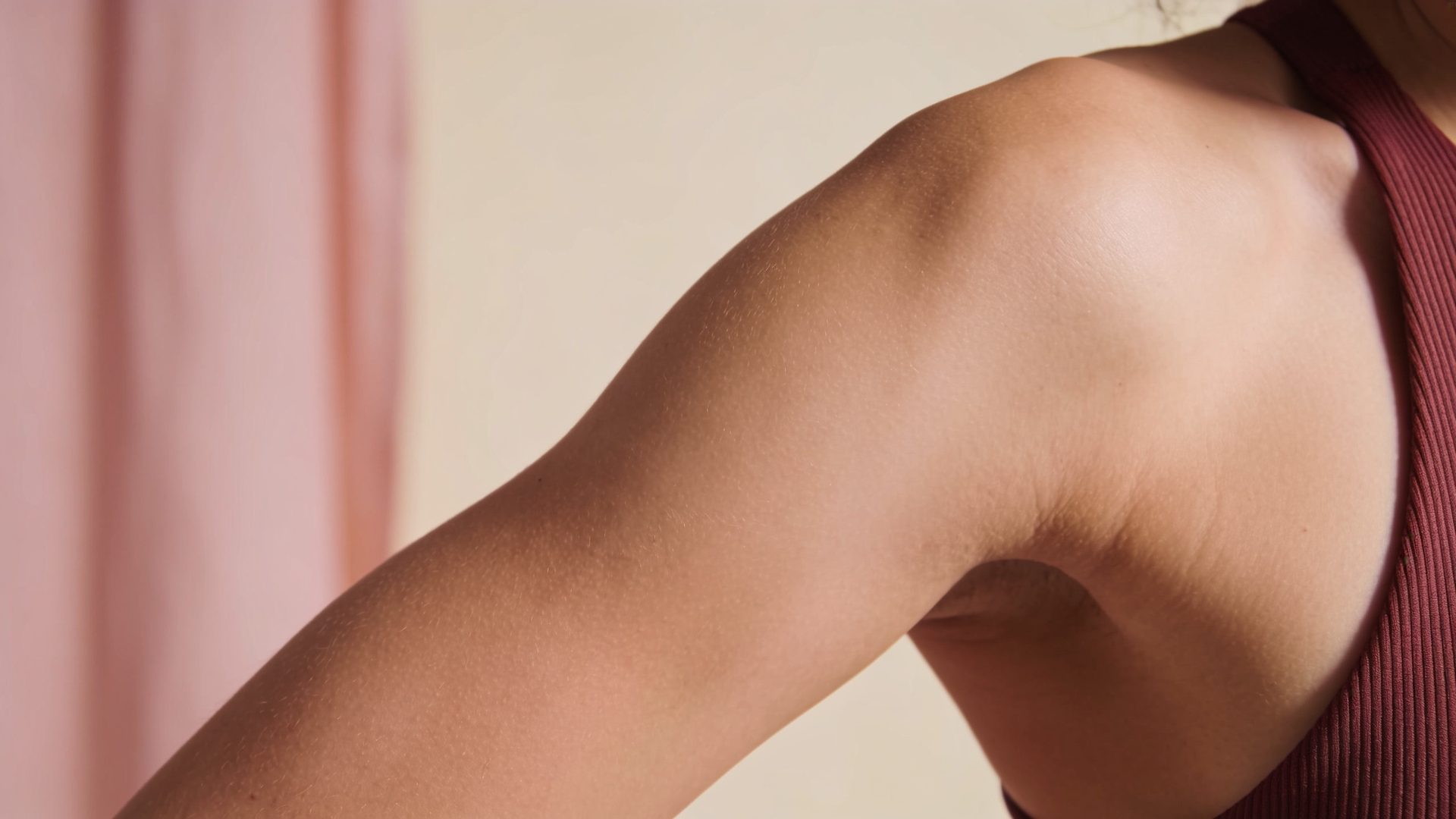
Dark Inner Thighs: Causes, When to Check, and How to Lighten Them Safely
Medical Director Dr Sin Yong explains why inner thighs darken, when the change is a medical sign, what helps at home, and how laser and creams are used at IN Eternity Clinic.
WhatsApp to Enquire →Key facts ↓Dark inner thighs are usually post-inflammatory pigmentation from friction, sweat, shaving or a healed rash in a warm skin fold, and they often lighten once the rubbing and irritation stop. Velvety, thickened darkening that also affects the neck or underarms may be acanthosis nigricans, a sign of insulin resistance that needs checking first. Gentle creams and low-energy laser can help. See underarm and skin-fold pigmentation.
- Commonest cause: post-inflammatory hyperpigmentation affects darker skin more often and more severely, and treatment starts with managing the irritation that caused it [1].
- A medical sign: acanthosis nigricans is dark, velvety, thickened skin on the neck, underarms, elbow and knee creases and groin folds; obesity-associated cases are checked with glucose, insulin and lipid tests [2].
- Obesity: in 34 adults attending an obesity clinic, 74% had acanthosis nigricans, and those with it had markedly higher fasting insulin [3].
- Erythrasma: this fold infection may look like plain darkening in darker skin; it glows coral-red under a Wood’s lamp, and clotrimazole and fusidic acid both work [4].
- Laser evidence: a 2025 review found only 10 studies on dark underarms; Q-switched Nd:YAG laser was effective in three without severe side effects, and inner-thigh studies are scarcer still [5].
What causes dark inner thighs?
The inner thigh is a skin fold: warm, often damp, and rubbed with every step. Repeated low-grade irritation stimulates pigment cells, and the skin darkens. This is post-inflammatory hyperpigmentation, and it affects darker skin types more often and more severely, which is why it is so common in Asian skin [1]. Singapore’s heat and humidity, tight jeans or leggings, sport, weight gain that increases contact between the thighs, and regular shaving or waxing along the bikini line all keep it going.
Not every dark patch is friction. A healed fungal rash or eczema can leave pigment behind, an active infection can look like darkening, and a velvety, thickened change can be a sign of insulin resistance. The table sets out the usual causes and their clues.
| Cause | How it looks | Clue | Usual approach |
|---|---|---|---|
| Friction and chafing | Flat brown darkening where the thighs touch | Worse with walking, sport, tight clothing or weight gain | Reduce rubbing; gentle creams; laser if persistent |
| Shaving, waxing or ingrown hairs | Darkening with bumps or dots along the bikini line | Regular hair removal | Change method; laser hair removal |
| A rash that has healed | Darker patch where an itchy rash used to be | Past fungal rash, eczema or product reaction | Marks fade over months once the rash is gone |
| Erythrasma or fungal infection | Reddish-brown or dark patch, sometimes scaly or itchy | Heat and sweat; erythrasma glows under a Wood’s lamp | Antibacterial or antifungal treatment [4] |
| Acanthosis nigricans | Velvety, thickened darkening; neck and underarms too | Weight gain, PCOS, family history of diabetes | Medical check; treat the metabolic cause [2][3] |
| Pregnancy or hormones | Gradual darkening of folds | Pregnancy, some hormonal medicines | Often fades afterwards; treatment deferred |
When are dark inner thighs a sign of something medical?
Acanthosis nigricans is the one to recognise. The skin is dark, coarse and velvety rather than simply darker, and it appears symmetrically on the neck, underarms, elbow and knee creases and groin folds. Most cases are linked with obesity and insulin resistance, and the recommended checks include fasting glucose, insulin and lipids [2]. In a study of 34 adults attending an obesity clinic, 74% had acanthosis nigricans, and they had markedly higher fasting insulin than those without it [3]. It is also seen with polycystic ovary syndrome and type 2 diabetes. Rarely, darkening that appears suddenly and spreads in an older adult signals an internal illness and needs prompt investigation.
Where the pattern suggests it, a blood test such as HbA1c through your family doctor or the clinic comes before any cosmetic treatment. Weight change and metabolic care improve acanthosis nigricans more than laser does.
Infection is the other thing to exclude. Erythrasma, a bacterial infection of skin folds, may show as subtle darkening rather than redness in darker skin; it glows coral-red under a Wood’s lamp, and both clotrimazole and fusidic acid creams are effective [4]. Jock itch, a fungal infection, is usually itchy with a scaly, raised edge. Treating the infection first stops the darkening from being renewed.
How to lighten inner thighs safely at home
Remove the friction first, because pigment keeps forming while the skin is rubbed. Anti-chafing shorts under skirts and dresses, breathable cotton underwear, changing promptly out of damp sports clothing, drying the folds gently after showering and a fragrance-free moisturiser or barrier balm all help. If shaving is the trigger, a sharp razor with gel in the direction of growth, or a switch to laser hair removal, reduces irritation.
Avoid what makes it worse. Scrubbing, lemon juice, baking soda and strong peeling pads irritate a skin fold, and irritation is the cause of the problem. Whitening creams from unfamiliar online sellers are a particular risk: Singapore authorities have warned about products found to contain undeclared mercury or potent steroids.
Medical creams can help once the skin is calm. Tyrosinase inhibitors such as hydroquinone, azelaic acid, kojic acid and arbutin, along with niacinamide and retinoids, reduce pigment production, but each must be used gently, because irritation can worsen post-inflammatory darkening [1]. Skin in a fold is thin and covered, so it irritates more easily than the face. See hydroquinone cream in Singapore. Pigment from irritation usually fades over several months once the drivers stop.
Dark groin laser: does it work, and is it safe in Asian skin?
Laser can help pigment that persists after the friction has been dealt with, but the evidence for the groin itself is thin. A 2025 systematic review of treatments for dark underarms, the nearest well-studied skin fold, found only 10 studies; Q-switched Nd:YAG laser was effective across three of them without severe side effects, and intense pulsed light (IPL) also helped in a comparison study [5]. IN Eternity Clinic does not offer IPL.
In Asian skin, energy has to be kept low. In a study of 22 Asian patients with melasma treated with low-fluence 1064 nm Q-switched laser, pigment lightened markedly after five sessions, but 3 developed mottled pale spots, 4 had rebound darkening and all relapsed during follow-up [6]. Melasma behaves differently from friction pigment, but the lesson carries over: low energy, spaced sessions, and removing the cause at the same time. Picosecond lasers deliver energy with less heat spread, which matters in skin already prone to darkening.
| Option | What it does | Suits | Watch for |
|---|---|---|---|
| Reducing friction | Removes the driver | Everyone with friction pigment | Needs to continue, or pigment returns |
| Prescribed lightening creams | Slow pigment production | Most post-inflammatory darkening | Irritation in a skin fold [1] |
| Low-energy picosecond laser | Fragments pigment with little heat | Persistent pigment after the cause is managed | Too much energy can darken or leave pale spots [6] |
| Laser hair removal | Ends shaving and ingrown hairs | Darkening driven by hair removal | Treats the cause, not existing pigment |
| Home remedies (lemon, baking soda) | Acidic or abrasive | Not recommended | Irritation that can deepen the colour |
How are dark inner thighs treated at IN Eternity Clinic?
Dr Sin Yong examines the area to separate flat friction pigment from velvety acanthosis nigricans and to look for signs of a rash or infection. He asks about shaving and waxing, clothing, exercise, weight change and the products you have tried, and recommends blood tests where acanthosis nigricans is suspected. Each area is examined separately, as the clinic does for underarms and the neck.
Treatment follows the same principles as the clinic’s underarm pigmentation plan: remove the cause, use prescribed lightening creams for a limited period, and, where pigment persists, low-energy picosecond laser over several sessions about four weeks apart, compared against baseline photographs. If shaving drives the darkening, bikini and Brazilian laser hair removal may be planned too. The cost depends on the cause, the area, the number of sessions and whether hair removal is added, and is explained at consultation. Suitability is decided at an in-person assessment, and results vary. Background is on post-inflammatory pigmentation.
What Dr Sin Yong looks for
- Whether the darkening is flat friction pigment or velvety, thickened acanthosis nigricans.
- Signs of a rash or infection in the fold, such as scale, itch or a raised edge.
- Shaving, waxing or epilating along the bikini line, and any ingrown hairs.
- Clothing, exercise, sweating and recent weight change.
- Products already tried, including whitening creams bought online, and any reaction to them.
General clinical observations used at consultation; they describe what is checked, not any individual result.
Frequently asked questions
How can I lighten my inner thighs?
Start by reducing friction: anti-chafing shorts, breathable fabrics, drying the skin after sweating and stopping harsh scrubs. Treat any rash. Pigment from irritation then often fades over months, faster with prescribed lightening creams. Persistent darkening can be treated with low-energy laser after a doctor has confirmed the cause.
Why are my inner thighs dark?
Usually because the skin there is rubbed, warm and damp, and repeated irritation leaves pigment behind, especially in darker skin. Shaving, ingrown hairs and healed rashes add to it. Less often, velvety darkening is acanthosis nigricans, linked with insulin resistance, or an infection such as erythrasma.
Can dark inner thighs be a sign of diabetes?
Sometimes. Dark, velvety, thickened skin on the inner thighs or groin that also affects the neck or underarms can be acanthosis nigricans, which is linked with insulin resistance and type 2 diabetes. In one study of adults attending an obesity clinic, 74% had it. A blood test such as HbA1c is a sensible first step.
Does dark groin laser work?
It can help persistent pigment from irritation, but the evidence for the groin itself is limited, and most studies are on underarms. Laser works better when friction and shaving are dealt with first, and in Asian skin it is used at low energy over several sessions to avoid patchy lightening or darkening.
What does dark inner thighs treatment in Singapore involve?
Treatment depends on the cause. Friction pigment is treated by removing the rubbing, prescribed creams and, if needed, low-energy picosecond laser. Darkening from shaving may suit laser hair removal. Acanthosis nigricans needs medical checks and metabolic care first, and infections are treated before any lightening.
Are whitening creams safe for inner thigh pigmentation?
Some are not. Strong bleaching or peeling products can irritate a skin fold and make darkening worse, and Singapore authorities have warned about whitening creams containing undeclared mercury or potent steroids. Use products you can trace, and ask a doctor before using anything strong on the groin.
How long does it take for dark inner thighs to fade?
Pigment from irritation usually fades over several months once friction and irritation stop, and deeper pigment takes longer. With laser, change is judged after several sessions about four weeks apart. Acanthosis nigricans improves mainly as the underlying insulin resistance is treated.
Book an assessment
IN Eternity Clinic, 9 Scotts Road, #12-01 Pacific Plaza, Singapore 228210. By appointment with Medical Director Dr Sin Yong. Monday to Saturday, 11am to 8pm. WhatsApp or call +65 8815 3008. At IN Eternity Clinic a consultation fee applies, and it is waived if you go ahead with any medical treatment; the fee is S$120.
International KOL — CLASSYS · HIRONIC · DEKA · ALMA · FOTONA · LUTRONIC
References
- Davis EC, Callender VD. Postinflammatory hyperpigmentation: a review of the epidemiology, clinical features, and treatment options in skin of color. J Clin Aesthet Dermatol 2010;3(7):20-31. PMID:20725554
- Phiske MM. An approach to acanthosis nigricans. Indian Dermatol Online J 2014;5(3):239-249. doi:10.4103/2229-5178.137765
- Hud JA, Cohen JB, Wagner JM, Cruz PD. Prevalence and significance of acanthosis nigricans in an adult obese population. Arch Dermatol 1992;128(7):941-944. doi:10.1001/archderm.1992.01680170073009
- Radhakrishnan S, Logamoorthy R, Karthikeyan K, et al. Erythrasma: a systematic review of interventions. Clin Exp Dermatol 2025;50(11):2139-2146. doi:10.1093/ced/llaf307
- Vahabi SM, Sajjadi S, Kalantari Y, et al. Axillary hyperpigmentation treatment: a systematic review of the literature. J Cosmet Dermatol 2025;24(8):e70418. doi:10.1111/jocd.70418
- Wattanakrai P, Mornchan R, Eimpunth S. Low-fluence Q-switched neodymium-doped yttrium aluminum garnet (1,064 nm) laser for the treatment of facial melasma in Asians. Dermatol Surg 2010;36(1):76-87. doi:10.1111/j.1524-4725.2009.01383.x
These sources describe mechanisms and general evidence. They are not a promise of any individual result; suitability is decided at an in-person assessment.