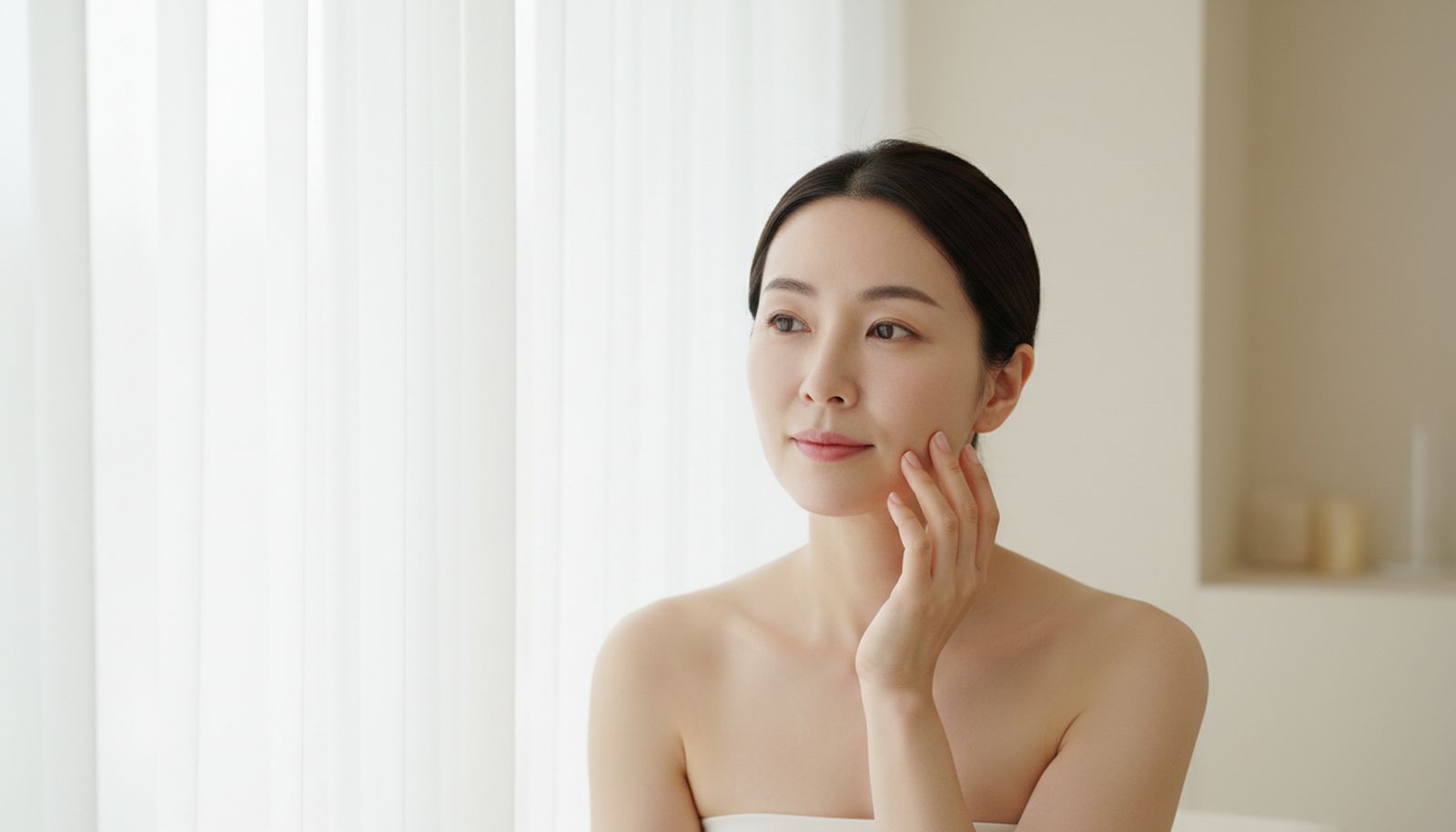
“Glass skin” is a look built from three medical goals. Medical Director Dr Sin Yong plans hydration, tone and texture work in sequence at Pacific Plaza, Orchard Road, so each step supports the next.
WhatsApp to Enquire →Key facts ↓“Glass skin” describes skin that reflects light evenly: uniform colour, good hydration and a fine, smooth surface. Medically that is three goals rather than one product. At IN Eternity Clinic, Dr Sin Yong combines skin boosters for hydration, low-fluence laser toning for even tone and medical facials for surface clarity, planned as a course over several months.
The phrase comes from Korean beauty culture and describes skin so even and hydrated that it seems to glow from within. Optically, that glow is light reflecting evenly from a smooth surface. Anything that scatters or absorbs light unevenly breaks the effect: rough texture, dry flaking, clogged pores, patchy pigment, or redness from inflamed or sensitised skin.
Seen this way, glass skin is not one treatment but a set of fixable problems. A consensus of skin experts describes skin quality in similar terms — evenness of colour, surface texture, firmness and radiance — and each responds to different tools. Dr Sin Yong first works out which of these is holding your skin back.

Hydration first. Injected skin boosters place hyaluronic acid or polynucleotide into the dermis in small amounts across the face. Options include Profhilo and Rejuran, chosen by skin thickness and laxity.
Tone next. Laser toning on the DEKA TORO breaks up pigment a little at a time at low energy, which matters in Asian skin because excess heat can trigger more pigment. Melasma is approached cautiously and alongside skincare.
Texture and maintenance. Medical facials such as Hydrafacial clear congestion and smooth the surface; the needle-free Deep Synergy Booster supports hydration between injectable sessions. Daily sunscreen and a simple routine hold the result.
“Glass skin is not a filter and not a lighter shade. It is hydrated, even skin that reflects light well, and it is built over months.”
It suits people with dull, dehydrated or slightly uneven skin who want gradual improvement. Active inflammatory acne is treated first, because boosters and lasers on inflamed skin can worsen marks. Rosacea and sensitised skin need calming before stimulation. Melasma can flare with heat, so settings and spacing are conservative. Those who are pregnant or breastfeeding defer injectables.

Skin booster injections are given after numbing cream; most people feel small, quick pricks and some pressure. Laser toning feels like light snapping or warmth and usually needs no numbing. Medical facials are comfortable, with a cool suction or mild tingle. Comfort is checked throughout, and any step can be paused.
Day 0: assessment and photographs, then the first step of the plan — often a booster session or a facial.
Days 1–3: after boosters, small bumps and pinpoint marks settle, usually within a day or two; bruising is possible. After laser toning, mild redness fades within hours.
Week 1: hydration feels better; the surface looks smoother. Sunscreen every morning.
Weeks 2–4: the next step in the sequence — for example a toning session or second booster — is done at the interval Dr Sin Yong sets.
Review at about three months: photographs are compared under the same light, and a maintenance rhythm is agreed.
“Glass skin facial” is a name used for facials that cleanse, gently exfoliate and flood the skin with hydration, so it reflects light more evenly for a while afterwards. One session can give a visible glow for several days, mainly from a smoother surface and well-hydrated outer layers. It does not change pigment, dermal hydration or texture for long, which is why a facial works as one part of a glass skin plan rather than the whole of it.
| Facial at IN Eternity Clinic | What it adds to the glass skin look | Suits | Limits |
|---|---|---|---|
| Hydrafacial | Clear pores, smoother surface, hydration | Congested, oily or dull skin | Surface-level; glow lasts days |
| Triple Hydrating LDM Hydrofacial | Hydration without heat or abrasion | Dry skin that flushes easily | Does not treat pigment |
| LDM ultrasound facial | Barrier support and calm, even surface | Dehydrated or post-procedure skin | Subtle on its own |
| Deep Synergy Booster | Hydrating ampoule carried in by ultrasound delivery, no needles | People who want a booster without injections | Not the same as an injected booster |
| Rejuran (injectable) | Dermal support for thin, tired skin | Thin or post-acne skin | Small bumps for a day or so |
The facial is chosen by skin type, and on the day the acid step, extraction and serums are adjusted to what the skin shows. For a fuller guide to each option, see medical facials.
For an event such as a wedding or a photoshoot, the steps that cause bumps, redness or flaking go first, and the gentlest step goes last. Four to six weeks before: injected skin boosters, so any bumps or bruises have long settled. Two to three weeks before: the last laser toning session, if pigment is part of the plan. Three to seven days before: Hydrafacial or an LDM facial, so the skin is at its most hydrated without any lingering pinkness.
In the final days, keep to your usual routine with sunscreen, and avoid trying new products, strong acids or retinoids, which can cause irritation at the wrong moment. A plan for a specific date is set at assessment; see the event skin plan.
Glass skin is a Korean beauty term for skin that looks smooth, clear and evenly hydrated, so it reflects light uniformly. Medically it combines three goals: good hydration, even colour and fine surface texture. Each is improved with different treatments, which is why a plan rather than a single product is used.
Most plans run over about three months, with steps spaced a few weeks apart so the skin can respond and recover. Some people see brighter, more hydrated skin within weeks; tone and texture change more gradually. Maintenance continues afterwards at a rhythm agreed at review.
They do different jobs. Injected skin boosters improve hydration and suppleness from within the dermis, while medical facials clear and smooth the surface. Laser toning addresses uneven pigment. Which matters most depends on what your skin is missing, and that is decided at assessment.
Yes. Glass skin is about evenness and hydration, not lightness, so it is achievable at any natural skin colour. Laser settings are chosen with care for darker skin because it is more prone to post-inflammatory pigmentation, sessions are spaced to let the skin settle, and daily sun protection matters for every skin tone.
Cost depends on which components you need, the products chosen for boosters, the number of laser or facial sessions, and how the plan is spaced. Dr Sin Yong explains the plan and its cost after assessment, so you only pay for steps your skin actually needs.
Daily broad-spectrum sunscreen, a gentle routine and not over-exfoliating are the foundations. Boosters are usually repeated every few months and facials every month or so, but the interval depends on your skin, age and climate exposure, and is set at review.
The glow after a single hydrating facial usually lasts several days to about a week, depending on skin type, climate and routine. Longer-lasting change in hydration, tone and texture comes from a course that adds skin boosters and, where needed, laser toning, with facials as maintenance every few weeks.
Facials improve the surface and give short-term hydration, which is part of the look. If pigment is uneven, the dermis is dehydrated or texture is rough, facials alone will not change these for long. A plan that adds boosters and gentle laser where needed gives a more lasting result, with facials keeping the surface clear between steps.
Often yes, with adjustments. A Hydrafacial with a salicylic step and careful extraction can help congestion, but inflamed spots are not squeezed, and active acne is treated medically first. Heavy, occlusive serums are avoided. Once acne is controlled, the rest of a glass skin plan can follow.

IN Eternity Clinic, 9 Scotts Road, #12-01 Pacific Plaza, Singapore 228210. By appointment with Medical Director Dr Sin Yong. Monday to Saturday, 11am to 8pm. WhatsApp or call +65 8815 3008.
These sources describe mechanisms and general evidence. They are not a promise of any individual result; suitability is decided at an in-person assessment.