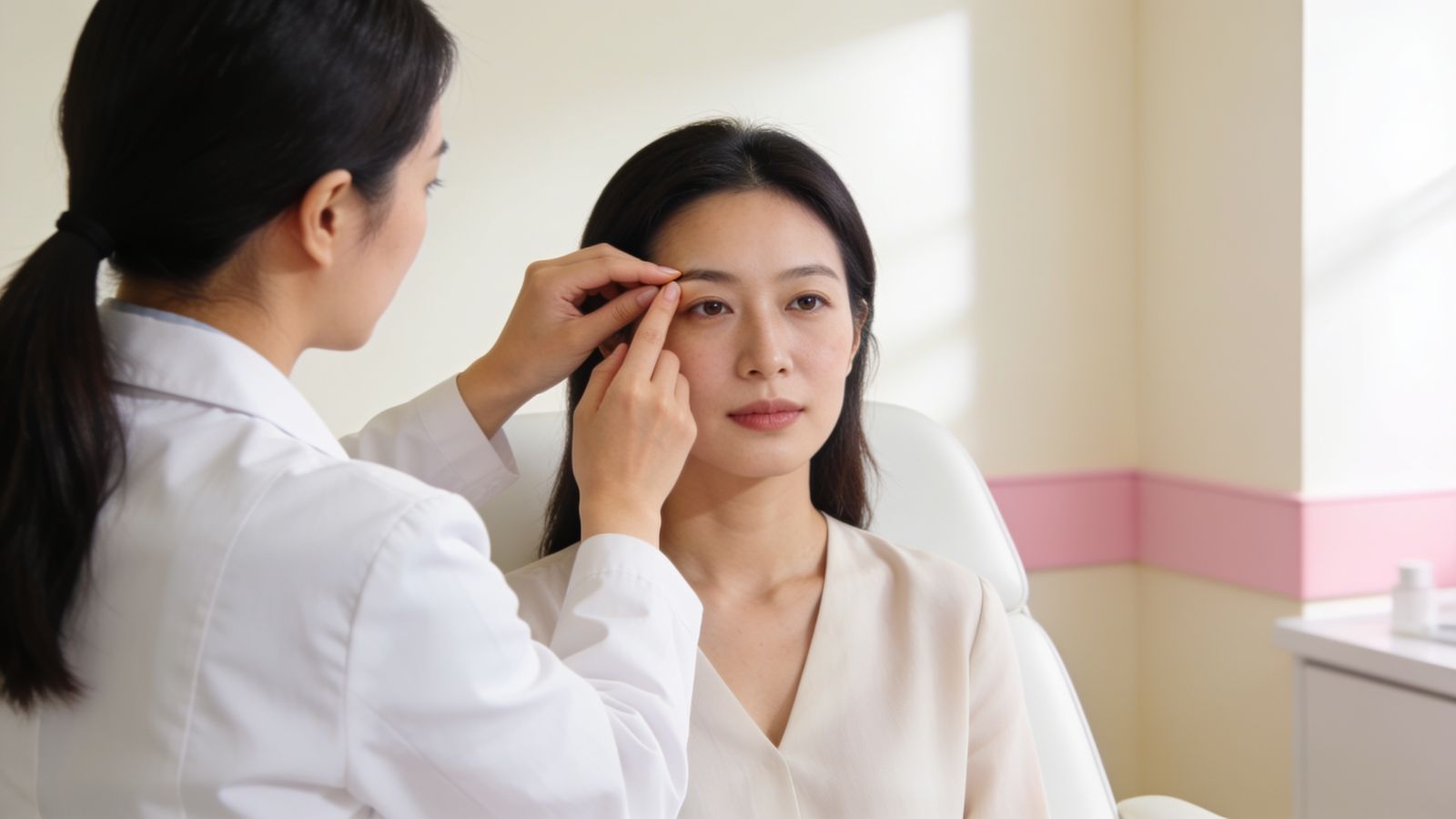
A skin plan built backwards from the day, so anything slow to build or with recovery time is finished well before the photographs. Dr Sin Yong sets the sequence at IN Eternity Clinic on Orchard Road.
WhatsApp to Enquire →Key facts ↓Start about six months ahead if you can. Treatments that build slowly or need recovery, such as acne control, pigment courses, resurfacing and collagen stimulators, go first. Skin boosters and toning fit three months out, anti-wrinkle injections two to four weeks before, and only a gentle hydrating facial in the final week. Nothing new in the last fortnight.
The first visit is an assessment rather than a treatment. Dr Sin Yong looks at what would change most in photographs and how long each part takes to show. That usually sorts treatments into two groups: the slow ones that must start now, and the quick ones that can wait.
Active breakouts come first, because acne that flares close to the date leaves marks that take months to fade. See acne treatment and, where the pattern is jawline and cyclical, hormonal acne. Pigment needs the same lead time: melasma and pigmentation courses are spaced weeks apart and judged over months.
Anything with real recovery belongs here too. Resurfacing for scarring, such as S3 resurfacing with the DEKA Tetra PRO, needs time to heal and remodel. Collagen stimulators such as Sculptra change slowly, and if older filler has made the face heavy, filler correction should be finished long before anything new is added.

This is the window for treatments that improve the skin itself over a short course. Skin boosters, including Profhilo and Rejuran, are usually given as two or three sessions a few weeks apart, so starting at around three months leaves room for the final session and a settling period.
Laser toning for uneven tone works across a series. Jaw slimming takes several weeks to show because the muscle slims gradually. Energy-based lifting such as Thermage or HIFU also builds over weeks. If you want smoother underarms or legs for a sleeveless dress, laser hair removal needs several sessions spaced weeks apart.
“The last fortnight is for treatments your skin already knows. A first-time anything, a week before the photographs, is a risk I will not book.”
Any filler adjustment, such as a small lip or chin refinement with dermal fillers, should be done by about six weeks before, so swelling and any bruising have long settled and there is time for a review. This is also the time for the last skin booster session in a course.
If underarm sweat marks on a gown are a worry, underarm sweating treatment can be planned now, since it takes a couple of weeks to reach its full effect.

Anti-wrinkle injections are usually given two to four weeks before the day. The effect develops over about one to two weeks, which leaves time for a small top-up at review if one side moves more than the other. For a softer, more natural look, some people prefer a micro-dose approach.
If you plan a facial in the final week, have the same one now as a trial. A Hydrafacial or the Triple Hydrating LDM Hydrofacial tested two weeks ahead tells you how your skin reacts before it matters.
The last week is for keeping skin calm and hydrated. A gentle treatment your skin has already had, such as a hydrating facial or the needle-free Deep Synergy Booster, two to five days before usually suits. More options are listed under medical facials.
Keep your usual skincare, wear sunscreen daily and protect your sleep. Follow the aftercare guidance for anything done in the weeks before.
Avoid first-time filler or anti-wrinkle injections, any new chemical peel (see chemical peels for proper timing), resurfacing or pigment lasers that crust, thread lifts, deep extractions, waxing or threading of the face, new skincare actives such as retinoids or acids, and sunbathing or tanning.
If time is short, the downtime planner and lunchtime treatments pages show which options settle within days. Dr Sin Yong will tell you plainly if a treatment should wait until after the event.
About six months ahead is ideal. That leaves time to control acne, start pigment treatment and complete anything with recovery time, then move on to skin boosters and fine-tuning. Three months still allows a useful plan; with only a few weeks, the focus shifts to gentle, low-risk options your skin has tolerated before.
Usually two to four weeks before. The effect takes about one to two weeks to settle, and the extra time allows a review and a small top-up if needed. A first-time treatment in the final week is not recommended because there is no time to adjust.
It is safer to finish any filler at least six weeks before. Swelling and bruising can take days to weeks to settle, and you want time for a review. If you have never had filler, the weeks before a wedding are not the time to try it for the first time.
A gentle hydrating facial that your skin already knows is usually fine two to five days before. Extractions, peels or anything new can cause redness or breakouts, so they are kept out of the final week. A trial session two weeks ahead shows how your skin responds.
A month is enough for gentle hydration treatments, careful anti-wrinkle injections if you have had them before, and a calm, consistent skincare routine. Treatments with crusting, peeling or a long build are better planned for after the event. Dr Sin Yong will tell you which options fit the time you have.
It depends on what your skin needs, how many treatments are involved and how much time there is before the event. A plan focused on hydration and fine-tuning involves fewer sessions than one that includes acne, pigment or scar treatment. Fees are explained at consultation once the plan is agreed.

IN Eternity Clinic, 9 Scotts Road, #12-01 Pacific Plaza, Singapore 228210. By appointment with Medical Director Dr Sin Yong. Monday to Saturday, 11am to 8pm. WhatsApp or call +65 8815 3008.
These sources describe mechanisms and general evidence. They are not a promise of any individual result; suitability is decided at an in-person assessment.