Skip to content
Woman with clear, matte skin representing enlarged pores treatment at IN Eternity Clinic, Singapore
Enlarged Pores · Oil · Laxity · Scarring · Orchard Road

Enlarged Pores Treatment Singapore

Oil, laxity or scarring — each pore has a reason.

Pores cannot be closed, but they can look smaller when the reason they look large is treated. At IN Eternity Clinic, Dr Sin Yong identifies the kind of pore first, then plans laser, peels or RF microneedling.

WhatsApp to Enquire →Key facts ↓
3 drivers
Oil, laxity, scarring
Asian skin
Settings chosen for
Course
Not one session
Collagen
Rebuilt at depth
Assessed and treated by Dr Sin Yong, Medical Director · MBBS (NUS) · MRCS (Edinburgh) · MSc Aesthetic Medicine (London) · MSc Practical Dermatology (Cardiff) · Designated DEKA Centre of Excellence
In short

Pores cannot be closed or removed, but they can look smaller when the reason they look large is treated. Oil-stretched pores respond to oil control, peels and laser toning; pores widened by loss of collagen support respond to collagen-building treatment such as RF microneedling or fractional laser; scar-related pores need resurfacing. Dr Sin Yong identifies which applies before planning treatment.

Reviewed by Dr Sin Yong, Medical Director, IN Eternity Clinic · Updated
Key facts
  • What changes: how visible pores look, not their number; pores are follicle openings and cannot be shut.
  • Three drivers: oil output (round, open pores in the T-zone), loss of collagen support with age and sun (elongated cheek pores) and acne scarring (irregular openings).
  • Options at IN: laser toning and pico laser, carbon laser peel, chemical peels, RF microneedling on Secret Duo, FSX or fractional CO2 laser, and skin boosters.
  • Asian skin: heat and acids are planned around the risk of post-inflammatory hyperpigmentation.
  • What is avoided: pore strips, scrubs and harsh astringents, which increase irritation and oiliness.
  • Where: IN Eternity Clinic, 9 Scotts Road, #12-01 Pacific Plaza, Singapore.
Causes

Why do pores look enlarged?

A pore is the opening of a hair follicle and its oil gland. Everyone has them, and their number does not change. What changes is how wide and how visible each opening looks, and three different processes drive that.

Oil. Sebaceous glands are largest on the nose, forehead and central cheeks. When they produce a lot of oil, the follicle opening stretches and the oil film catches light, so pores look round, open and shiny by midday. Sebum output is set largely by genetics and androgens, and Singapore’s heat and humidity make oily skin feel and look oilier. Men tend to have larger glands and more visible pores.

Loss of support. The wall of each follicle is held open by the collagen and elastic fibres of the surrounding dermis. With age and years of sun, that support thins and the skin sags slightly, so pores on the cheeks stretch into elongated, teardrop or linear shapes that line up with the direction of gravity. These are not oily pores, and drying the skin does nothing for them.

Scarring and congestion. Inflamed acne damages the follicle wall and the dermis around it. Healed, it can leave an irregular, enlarged opening that blends into shallow acne scars. Plugs of keratin and oil (blackheads) also hold a pore open from the inside, and darken it, which makes it look larger than it is.

Diagnosis

Which kind of enlarged pores do you have?

Most faces show more than one kind, often oily pores on the nose and ageing pores on the cheeks. Telling them apart is the step that decides the treatment.

Guide only. Pore type is confirmed in person, under good light.
KindWhere and how they lookMain driverUsually responds to
Oily, stretchedRound, open pores on the nose, forehead and central cheeks; shiny by middayHigh sebum outputOil-control skincare, salicylic acid peels, laser toning or carbon laser peel
CongestedPores plugged with blackheads or whiteheadsKeratin and oil blocking the openingExtraction, salicylic acid, retinoids; see blackhead removal
AgeingElongated or teardrop pores on the cheeks, more visible when the skin is pushed upThinning collagen support around the follicleRF microneedling, fractional laser, collagen-supporting boosters
Scar-relatedIrregular, wide openings among shallow acne scarsDermal scarring after acneResurfacing: fractional CO2, RF microneedling, as part of a scar plan
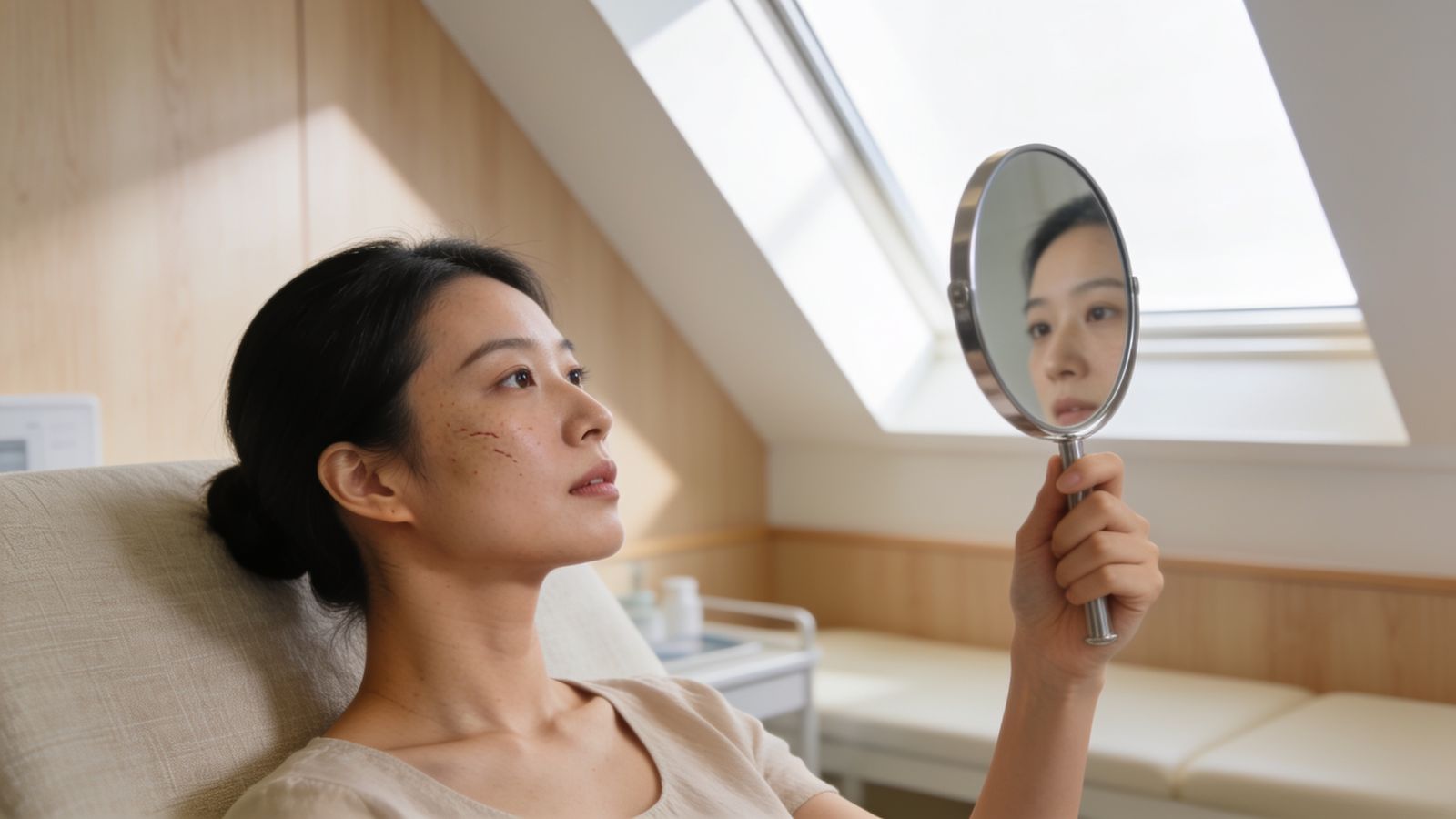
A patient checking her cheek texture in a mirror under angled light
Illustrative image. Not a patient of IN Eternity Clinic.
Options

Pore treatment options at IN Eternity Clinic

Laser toning and pico laser. Low-fluence 1064 nm laser toning passes gently over the whole face and, over a course, many people find the skin less oily and more even, which makes pores less obvious. Picosecond protocols such as R2 Glow on the Fotona StarWalker PQX and T2 Frax Radiance on the DEKA TORO add a fine textural effect for pores and dullness.

Carbon laser peel. A thin carbon layer is applied and then heated and broken up by Q-switched Nd:YAG passes. It is aimed at oily, congested skin and rough texture, with little downtime. See carbon laser peel.

Chemical peels. Salicylic acid dissolves in oil and reaches into the follicle, which suits oily and congested pores; glycolic and mandelic acids refine surface texture. Strength is built up gradually in Asian skin. See chemical peels.

RF microneedling. Fine insulated needles release radiofrequency heat at a chosen depth, prompting new collagen around the follicle wall. It is one of the more direct ways to treat ageing and scar-related pores. At IN Eternity Clinic it is done on the Secret Duo; see RF microneedling.

Fractional laser. Non-ablative FSX laser (thulium and erbium glass) refines texture and fine pores with modest downtime. Ablative fractional CO2 on the DEKA Tetra Pro is kept for scar-related pores within a scar plan. The difference is explained on fractional laser.

675 nm laser and skin boosters. The 675 nm laser works on redness, oil and texture together. Skin boosters such as Juvelook (PDLLA) improve hydration and firmness, which can soften the look of ageing pores as part of a wider plan.

Compared

Pore treatments compared: depth, recovery and course

Recovery and course vary with settings and skin type; both are set after assessment.
TreatmentWorks mainly onTypical recoveryUsual course
Laser toningOil and tone, upper dermisMild redness for hoursA series, one to a few weeks apart
Carbon laser peelSurface oil, congestion, textureMild redness for hoursA series, spaced a few weeks apart
Superficial chemical peelSurface and follicle (salicylic)Light flaking for a few daysA series, usually 2–4 weeks apart
RF microneedlingCollagen around the follicle, at set depthRedness and a sandpaper feel for a day or twoA course, several weeks apart
FSX laserTexture and fine poresRedness for hours; light scabs for 3–7 days after stronger passesUsually 3–5 sessions, 4–6 weeks apart
Fractional CO2Scar-related pores and deeper textureAbout 5–7 days for the surface to healSelected cases, within a scar plan

Combinations are common. Oily, congested skin is usually brought under control first with skincare, peels or laser toning; collagen-building treatment for ageing pores follows, so each step can be judged on its own.

“A pore is an opening, not a blemish. The aim is never to close it, only to treat whatever is holding it open.”
— Dr Sin Yong, Medical Director, IN Eternity Clinic
Expectations

Can enlarged pores be shrunk permanently?

No treatment closes pores or removes them, and claims that suggest otherwise are describing a temporary effect. What treatment can do is reduce oil, clear plugs and rebuild some of the collagen that holds the follicle wall in shape. When that works, pores look smaller and the skin looks smoother, and the change is visible in photographs taken in the same light.

How long that lasts depends on the cause. Oil production returns to its natural level, so oily pores need ongoing skincare and occasional maintenance. Collagen built by RF microneedling or fractional laser lasts longer, but the skin keeps ageing and sun exposure keeps wearing collagen down. Sun protection is therefore part of pore treatment, not an extra.

Asian skin

Pore treatment in Asian skin: avoiding pigment after treatment

Most people in Singapore have Fitzpatrick skin types III to V, which darken easily after heat or irritation. Post-inflammatory hyperpigmentation is the commonest unwanted effect of over-treating pores with peels, lasers or needles, and it can take months to fade.

At IN Eternity Clinic, energy and density are chosen for the skin type, intervals are not shortened to speed things up, and a recent tan or active inflammation means waiting. Studies of fractional resurfacing in Asian skin link pigment problems to higher energy and denser treatment, which is why the plan aims for steady change across a course rather than one aggressive session.

Woman with natural skin texture in soft light, representing pore and texture care
Illustrative image. Not a patient of IN Eternity Clinic.
At home

Pore care at home in Singapore’s humidity

Cost

How much does pore treatment cost in Singapore?

Cost depends on the kind of pores you have, the treatment chosen, the area treated, how many sessions the course needs and whether more than one approach is combined. Oil-control treatment is usually a shorter, lighter series; collagen-building treatment for ageing or scar-related pores is a longer course. At IN Eternity Clinic the plan and its cost are explained after assessment, and the consultation fee is waived with any medical treatment.

Questions

Frequently asked questions

Can pores be shrunk, or only made to look smaller?

Only made to look smaller. Pores are follicle openings and cannot be closed. Treatment reduces oil, clears plugs and rebuilds some of the collagen support around the follicle, which makes pores less visible. Maintenance and sun protection help the change hold.

Which laser treats enlarged pores?

It depends on the cause. Laser toning and carbon laser peel suit oily, congested pores; fractional lasers such as FSX, and RF microneedling, suit pores widened by ageing or scarring. Dr Sin Yong chooses after examining the skin in person.

RF microneedling or fractional laser for pores?

Both build collagen around the follicle. RF microneedling delivers heat at a set depth through fine needles and suits ageing and scar-related pores; non-ablative fractional laser such as FSX works more broadly on texture with lighter recovery. They are sometimes combined in a course.

Do chemical peels help enlarged pores?

They help oily and congested pores, especially salicylic acid, which reaches into the follicle. Peels have less effect on pores widened by ageing, which usually need collagen-building treatment. Strength is increased gradually to limit irritation and pigment in Asian skin.

Are enlarged pores on the nose the same as blackheads?

Not quite. Many nose pores are simply large because the oil glands there are large. Blackheads are plugs of oil and keratin that sit in the pore and darken at the surface, making it look bigger. Clearing plugs helps, but the pore itself remains.

How many sessions will I need for enlarged pores?

Most plans are a course rather than a single visit. Oil-control treatments are usually a short series; collagen-building treatment for ageing pores often needs three or more sessions spaced weeks apart. The plan is reviewed against baseline photographs.

Do pores get bigger with age?

They often look bigger. Collagen and elastic fibres around each follicle thin with age and sun, and the skin sags slightly, so pores on the cheeks stretch into elongated shapes. Sun protection and collagen-building treatment address this better than oil control.

Is there downtime after pore treatment?

It varies. Laser toning and carbon peel usually mean redness for a few hours. RF microneedling and stronger fractional passes mean a day or several of redness, roughness or light scabs. Recovery is discussed before any session is booked.

Related at IN Eternity: Enlarged pores explained · Chemical peels · RF microneedling · Carbon laser peel · Blackhead removal · Skin texture

Book an assessment

IN Eternity Clinic, 9 Scotts Road, #12-01 Pacific Plaza, Singapore 228210. By appointment with Medical Director Dr Sin Yong. Monday to Saturday, 11am to 8pm. WhatsApp or call +65 8815 3008. The consultation fee is waived with any medical treatment.

WhatsApp to Enquire →Call +65 8815 3008
S
Dr Sin Yong
MBBS (NUS) · MRCS (Edinburgh) · MSc Aesthetic Medicine (London) · MSc Practical Dermatology (Cardiff)
International KOL — CLASSYS · HIRONIC · DEKA · ALMA · FOTONA · LUTRONIC

References

  1. Lee SJ, Seok J, Jeong SY, et al. Facial pores: definition, causes, and treatment options. Dermatol Surg 2016;42(3):277-285. doi:10.1097/DSS.0000000000000657
  2. Cho SI, Chung BY, Choi MG, et al. Evaluation of the clinical efficacy of fractional radiofrequency microneedle treatment in acne scars and large facial pores. Dermatol Surg 2012;38(7):1017-1024. doi:10.1111/j.1524-4725.2012.02402.x
  3. Manstein D, Herron GS, Sink RK, Tanner H, Anderson RR. Fractional photothermolysis: a new concept for cutaneous remodeling using microscopic patterns of thermal injury. Lasers Surg Med 2004;34(5):426-438. doi:10.1002/lsm.20048
  4. Fischer TC, Perosino E, Poli F, Viera MS, Dreno B. Chemical peels in aesthetic dermatology: an update 2009. J Eur Acad Dermatol Venereol 2010;24(3):281-292. doi:10.1111/j.1468-3083.2009.03409.x
  5. Chan HH, Manstein D, Yu CS, et al. The prevalence and risk factors of post-inflammatory hyperpigmentation after fractional resurfacing in Asians. Lasers Surg Med 2007;39(5):381-385. doi:10.1002/lsm.20512
  6. Singapore Medical Council. Guidelines on Aesthetic Practices for Doctors (2016 edition). healthprofessionals.gov.sg/smc

These sources describe mechanisms and general evidence. They are not a promise of any individual result; suitability is decided at an in-person assessment.

WhatsApp us