Skip to content
Woman relaxing during a facial, representing what an acne scar facial can do
Acne Scar Facial · Post-Acne Marks · Texture · Guide

Acne Scar Facials: What a Facial Can and Cannot Do

Marks respond to facials. Scars need more.

Many “acne scar facials” are really treatments for marks. Dr Sin Yong of IN Eternity Clinic on Orchard Road explains what a facial can do for marks and texture, and where its limits are.

WhatsApp to Enquire →Key facts ↓
Marks
Respond to facials
Scars
Need procedures
Series
Not one session
Sun care
Every day
Assessed and treated by Dr Sin Yong, Medical Director · MBBS (NUS) · MRCS (Edinburgh) · MSc Aesthetic Medicine (London) · MSc Practical Dermatology (Cardiff) · Designated DEKA Centre of Excellence

An acne scar facial can help flat post-acne marks and rough surface texture, through exfoliation, gentle peels, hydration and pigment-safe brightening over a series. It cannot lift indented scars, which sit in the dermis and need procedures such as subcision, fractional laser or RF microneedling. The useful first step is knowing whether you have marks, scars or both.

Key facts
  • Marks are not scars: flat brown marks are post-inflammatory hyperpigmentation; flat red or purple marks are dilated vessels. Neither changes the skin’s texture.
  • Why brown marks form: inflammation stimulates pigment cells, which deposit extra melanin in the epidermis or, less often, deeper in the dermis.
  • Asian skin: post-inflammatory hyperpigmentation is more common and lasts longer in Fitzpatrick III to V skin, so gentle methods matter.
  • What exfoliation does: speeds shedding of pigmented surface cells, helping epidermal marks fade sooner; it has little effect on deeper pigment.
  • Superficial peels: salicylic, glycolic, mandelic and lactic acids act on the epidermis; a series can help marks and fine texture.
  • Hydration: plumps the surface for a few days, which can soften the look of very shallow texture; it does not rebuild collagen.
  • What a facial cannot do: raise indented scars, which are caused by collagen loss and tethering in the dermis.
  • Sun protection: daily sunscreen is the single most useful step for brown marks; ultraviolet and visible light darken them.
Reviewed by Dr Sin Yong, Medical Director, IN Eternity Clinic · Last updated
Marks or scars

Marks or scars: why the answer decides whether a facial helps

When people say “acne scars”, they often mean two different things. The first is flat marks: brown patches where inflammation left extra pigment, and red or purple spots where small vessels stayed dilated. These sit in or just under the surface and do not change the skin’s contour. The second is true scars: indented ice-pick, boxcar and rolling scars where collagen was lost, and occasionally raised scars where too much was made.

A simple test helps. In flat, even light, marks are visible because of colour. In side light, with the colour ignored, scars show as shadows and dips. Many faces have both, often in the same area. A facial can do useful work on marks and on the very surface of the skin. It cannot reach the dermis, where indented scars are formed, and no amount of exfoliation or serum will lift them.

That is not a reason to dismiss facials. Marks are the main concern for many people with acne in Singapore, and they respond well to gentle, consistent care. It is a reason to know which problem you are paying to treat.

Woman checking her skin in side light, representing marks versus scars
Illustrative image. Not a patient of IN Eternity Clinic.
Marks

What can a facial do for post-acne marks?

Brown marks, or post-inflammatory hyperpigmentation, fade as pigmented surface cells are shed and the pigment cells calm down. A facial that includes gentle exfoliation, such as a mild acid step or hydradermabrasion, speeds that shedding. Brightening serums containing ingredients such as niacinamide, azelaic acid, vitamin C or tranexamic acid can be applied while the skin is receptive. Over a series of sessions, combined with daily sunscreen and a home routine, epidermal marks often fade faster than they would on their own.

The caution in Asian skin is irritation. Anything that inflames the skin, including aggressive extraction, harsh scrubs or strong peels done too often, can trigger new pigment and make marks worse. A good acne scar facial for marks is therefore deliberately gentle. Red marks respond less to facials, because they are caused by vessels rather than pigment; they usually fade with time and respond to vascular-acting laser if they persist. See post-inflammatory pigmentation.

“A facial can help marks fade and skin look smoother. It cannot raise a scar that sits in the dermis, and I say so before anyone books one.”
— Dr Sin Yong, Medical Director, IN Eternity Clinic
Texture

Can a facial improve acne scars at all?

For very shallow, rolling texture, a little. Hydration plumps the upper skin and softens fine irregularities for a few days, and a series of superficial peels can refine the surface. Reviews of non-energy treatments for acne scarring describe superficial peels as useful mainly for superficial texture and pigment, with medium-depth and focal peels, such as TCA CROSS for ice-pick scars, needed for real change in scar depth. Those focal peels are medical procedures rather than facials.

What a facial cannot do is break the fibrous bands that hold rolling scars down, or rebuild the lost collagen under boxcar and ice-pick scars. That needs controlled injury deeper in the skin: subcision, RF microneedling, fractional CO2 or picosecond laser, and sometimes collagen stimulation. If side light shows clear dips, a facial is support, not the treatment.

Injectable skin boosters sit between the two. Polynucleotides and some collagen-stimulating boosters have been studied for shallow acne scarring and skin quality, but they are injections given by a doctor rather than facials, and they are usually used alongside the procedures above rather than instead of them. See skin boosters for acne scars.

Gel and cotton cloth, representing a gentle facial for post-acne marks
Illustrative image. Not a patient of IN Eternity Clinic.
Compared

How do facials compare with other options for marks and scars?

A simplified guide, for orientation only:

OptionBrown marksRed marksIndented scars
Medical facial or HydrafacialHelps over a seriesLittle effectNo real change
Superficial peel seriesHelpsLittle effectFine texture only
Picosecond or toning laserHelpsSome effectShallow texture
Subcision, CO2, RF microneedlingNot the aimNot the aimMain tools

Most plans combine two or more rows, in a set order: acne controlled first, marks and surface next or in parallel, deeper scar work in a course. See acne scar treatment for the procedures.

Timing

How long do post-acne marks take to fade, and what helps at home?

Left alone, many brown marks fade over three to twelve months; red marks often take a similar time. Pigment that sits deeper, in the dermis, can last longer and looks more grey-brown than tan. Several things slow fading down: new breakouts in the same area, picking, sun exposure without protection, and irritation from harsh products or over-frequent treatments.

Facials and peels shorten that timeline for epidermal marks rather than replacing it. A realistic expectation is a gradual lightening over a series of sessions, judged against photographs taken in the same light, rather than a visible change after a single facial. If marks are no lighter after three or four months of gentle care and daily sunscreen, it is time to reassess whether they are deeper pigment, vessel marks or scars.

What happens between sessions matters as much as the sessions themselves. A simple routine covers most needs: a gentle cleanser; a treatment step for marks, such as azelaic acid, niacinamide or a retinoid if acne is still active (some of these are prescription strength); a light moisturiser; and a broad-spectrum sunscreen every morning, reapplied when outdoors. Tinted sunscreens containing iron oxides also block visible light, which can darken pigment in Asian skin.

Introduce one active at a time, at a lower frequency, and stop if the skin stings or reddens for more than a few minutes, because irritation is the enemy of fading marks. Avoid scrubs, brushes and home peels while having in-clinic treatment, and do not pick at spots or scabs. Bring your products to the consultation so they can be checked against the in-clinic plan.

Names

When a “facial” is really a procedure

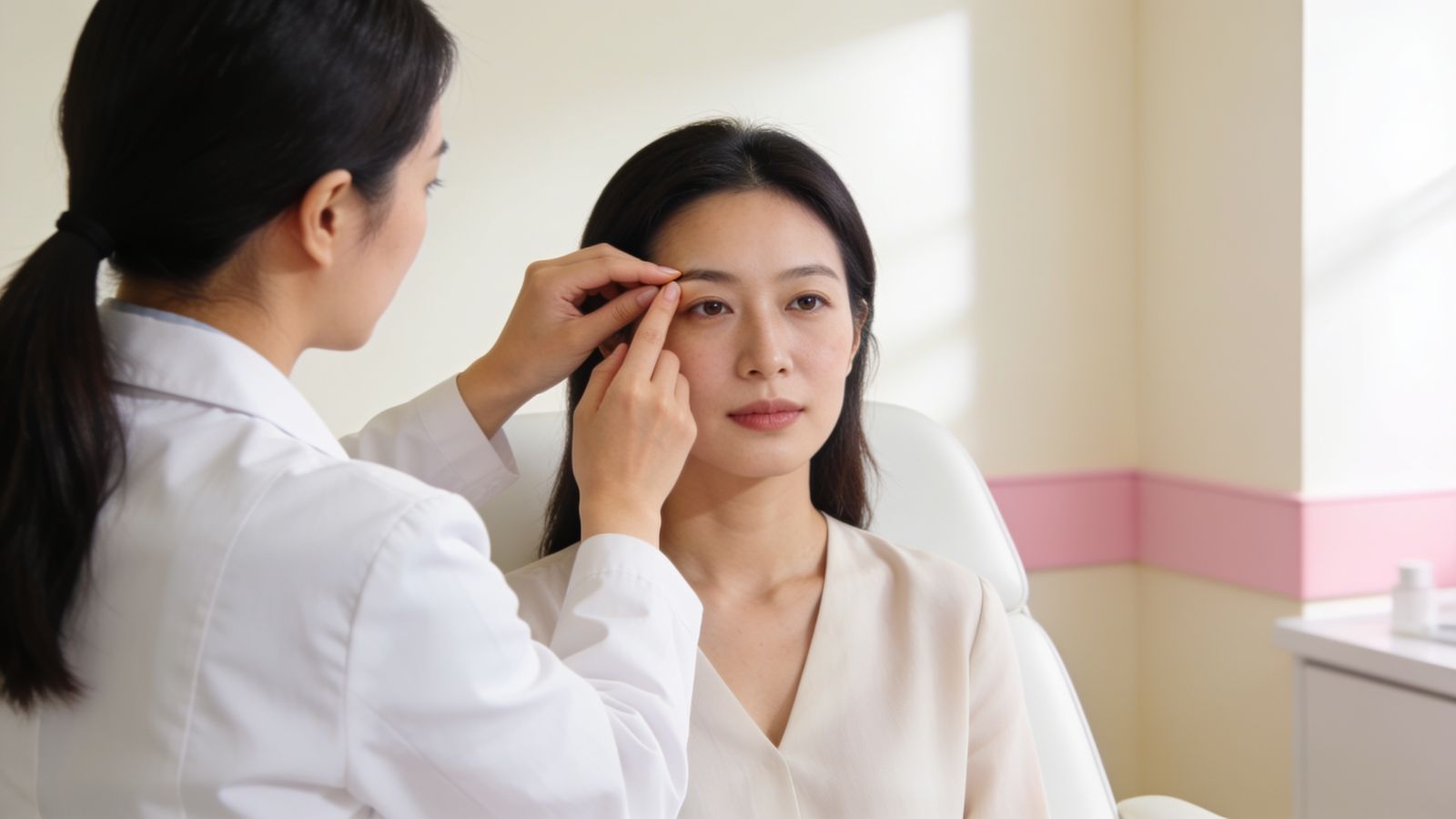
Marketing blurs the line. “Microneedling facial”, “laser facial” and “scar facial” can describe very different treatments. Microneedling and RF microneedling make controlled injuries in the dermis; they can help scars but carry risks of infection and pigment if done without medical oversight. Laser treatments vary from gentle toning to resurfacing. Rejuran, a polynucleotide product, is often called a facial but is an injectable treatment given by a doctor.

Before booking, ask what exactly is done, how deep it acts, who performs it, what the recovery is and whether your marks or scars have been assessed first. A clear answer to those questions is more useful than the name on the menu. For a comparison of settings, see clinic vs beauty salon.

At IN Eternity Clinic

How marks and scars are planned at IN Eternity Clinic

Dr Sin Yong first separates marks from scars in flat and side light, and checks that acne is controlled. For marks and surface texture, the options include Hydrafacial, a series of superficial chemical peels chosen for Asian skin, the LDM ultrasound facial for barrier support, and picosecond laser for stubborn brown marks. For indented scars, the plan moves to the scar pathway, with facials kept for maintenance and comfort between procedures.

Sequence matters. Facials and gentle peels can run while scar procedures are being planned, but they are paused for a short period around resurfacing or RF microneedling so the skin can heal undisturbed. Strong acids and extraction are not done in the days either side of a laser session. The LDM ultrasound facial is often used after procedures to calm and hydrate. Progress on marks and scars is reviewed against standard photographs, so the plan follows what the skin is actually doing. The consultation fee is waived with any medical treatment.

Myths and facts

Common myths, answered

Questions

Frequently asked questions

Can a facial get rid of acne scars?

A facial can help flat post-acne marks and refine very shallow texture over a series, especially with gentle exfoliation and daily sunscreen. It cannot lift indented ice-pick, boxcar or rolling scars, which are caused by collagen loss and tethering in the dermis. Those need procedures such as subcision, RF microneedling or fractional laser.

How many facials are needed to fade acne marks?

Brown marks usually fade over months, and a series of facials or superficial peels every two to four weeks can help them fade sooner. The number depends on how deep the pigment sits, your skin type and how consistently sunscreen is used. Progress is judged over a course, not after one session.

Which facial is suitable for acne marks?

A gentle facial with mild exfoliation, such as a Hydrafacial or a superficial peel, followed by brightening serums and sunscreen, suits most epidermal marks. Harsh scrubs, aggressive extraction and strong peels are avoided because irritation can create new pigment in Asian skin. The choice depends on whether acne is still active.

Can I have an acne scar facial while I still have breakouts?

Often yes, with adjustments. Blackheads and whiteheads can be cleared, but inflamed nodules are not squeezed. If acne is still active, it should be treated medically at the same time, because new spots keep creating new marks. Deeper scar procedures are usually planned once breakouts are controlled.

Is a peel better than a facial for acne marks?

They overlap. A superficial peel series acts more directly on pigmented surface cells and fine texture, while a facial combines gentler exfoliation with extraction and hydration. In Asian skin both need to be gentle and consistent. Many plans use a facial for maintenance and peels as a short series.

Why have my acne marks not faded after many facials?

Common reasons are ongoing breakouts creating new marks, inconsistent sun protection, irritation from the facials themselves, deeper dermal pigment, or the marks actually being scars or red vessel marks. An assessment in flat and side light clarifies which applies, and the plan can then shift to laser or scar treatment.

How much does an acne scar facial cost in Singapore?

Cost depends on the type of facial or peel, whether add-ons such as boosters are used, how many sessions are planned, and whether laser or scar procedures are needed as well. A series is planned differently from a single facial. The plan and its cost are explained after assessment, and the consultation fee is waived with any medical treatment.

Related at IN Eternity Clinic
Medical facialsChemical peelsHydrafacialAcne scar treatmentPost-inflammatory pigmentationAcne facial vs medical treatment

Book an assessment

IN Eternity Clinic, 9 Scotts Road, #12-01 Pacific Plaza, Singapore 228210. By appointment with Medical Director Dr Sin Yong. Monday to Saturday, 11am to 8pm. WhatsApp or call +65 8815 3008.

WhatsApp to Enquire →Call +65 8815 3008
S
Dr Sin Yong
MBBS (NUS) · MRCS (Edinburgh) · MSc Aesthetic Medicine (London) · MSc Practical Dermatology (Cardiff)
International KOL — CLASSYS · HIRONIC · DEKA · ALMA · FOTONA · LUTRONIC

References

  1. Fabbrocini G, Annunziata MC, D’Arco V, et al. Acne Scars: Pathogenesis, Classification and Treatment. Dermatol Res Pract 2010;2010:893080. doi:10.1155/2010/893080
  2. Kontochristopoulos G, Platsidaki E. Chemical peels in active acne and acne scars. Clin Dermatol 2017;35(2):179-182. doi:10.1016/j.clindermatol.2016.10.011
  3. Freedman BM. Hydradermabrasion: an innovative modality for nonablative facial rejuvenation. J Cosmet Dermatol 2008;7(4):275-280. doi:10.1111/j.1473-2165.2008.00406.x
  4. Kravvas G, Al-Niaimi F. A systematic review of treatments for acne scarring. Part 1: Non-energy-based techniques. Scars Burn Heal 2017;3:2059513117695312. doi:10.1177/2059513117695312
  5. Davis EC, Callender VD. Postinflammatory hyperpigmentation: a review of the epidemiology, clinical features, and treatment options in skin of color. J Clin Aesthet Dermatol 2010;3(7):20-31. PMID 20725554

These sources describe mechanisms and general evidence. They are not a promise of any individual result; suitability is decided at an in-person assessment.

WhatsApp us