Skip to content
Woman with firm, healthy skin, illustrating collagen skin boosters
Collagen Skin Booster · PDLLA · PLLA · ECM · Orchard Road

Collagen Skin Boosters: PDLLA, PLLA and ECM Explained

Make collagen, or supply it: two very different ideas.

Collagen skin booster is a label shared by products that work in opposite ways. Dr Sin Yong at IN Eternity Clinic on Orchard Road explains what PDLLA, PLLA and ECM boosters are, and which he uses.

WhatsApp to Enquire →Key facts ↓
Stimulate
PDLLA and PLLA
Supply
ECM and atelocollagen
Months
Biostimulator timeline
Not dissolvable
Polylactic acids
Assessed and treated by Dr Sin Yong, Medical Director · MBBS (NUS) · MRCS (Edinburgh) · MSc Aesthetic Medicine (London) · MSc Practical Dermatology (Cardiff) · Designated DEKA Centre of Excellence

A collagen skin booster is an injectable meant to raise the skin’s collagen, either by stimulating it or by supplying collagen-like matrix. PDLLA (for example Juvelook) and diluted PLLA (for example Sculptra) are biostimulators that prompt fibroblasts to make new collagen over months. ECM or atelocollagen boosters supply animal-derived collagen directly. IN Eternity Clinic uses biostimulators, not animal-collagen injectables.

Key facts
  • Two mechanisms: biostimulators provoke your own fibroblasts to build collagen; ECM and atelocollagen products deliver collagen or matrix from an outside source.
  • PDLLA: poly-D,L-lactic acid microspheres, usually supplied with hyaluronic acid, placed in the skin for texture, crepiness and shallow scars.
  • PLLA: poly-L-lactic acid; placed deep for volume, or more diluted and spread more widely for skin firmness on the face and body.
  • ECM and atelocollagen: purified collagen, often porcine, with the most immunogenic parts removed; it gives an early effect and is gradually broken down.
  • Other stimulators: diluted calcium hydroxylapatite and polycaprolactone also prompt collagen and are used in some skin-quality protocols.
  • Timeline: biostimulators change the skin gradually over weeks to months; supplied collagen shows earlier but is absorbed over time.
  • Cannot be dissolved: hyaluronidase does not break down PDLLA, PLLA or collagen, so dose and depth are kept conservative.
  • At IN Eternity Clinic: collagen stimulation uses registered biostimulators such as Juvelook and Sculptra; animal-derived collagen injectables are not used.
Reviewed by Dr Sin Yong, Medical Director, IN Eternity Clinic · Last updated
The label

What is a collagen skin booster?

Collagen gives the dermis its strength and density. From the mid-twenties, the skin makes less of it each year, and sun exposure breaks down what is there. Thinner, more crepey skin with softer support follows. “Collagen skin booster” has become a catch-all term for injectables marketed to address that, but the products under the label work in two opposite ways.

The first group are biostimulators: biodegradable particles that the body responds to by laying down its own new collagen around them. Poly-D,L-lactic acid (PDLLA) and poly-L-lactic acid (PLLA) are the main examples used as boosters. The second group supply collagen or extracellular matrix (ECM) from outside, usually purified animal collagen called atelocollagen. Knowing which group a product belongs to tells you how fast it works, what it feels like and what can go wrong. The broader collagen guide covers non-injectable ways to support collagen too.

Collagen drinks and supplements are sometimes sold under similar names. Swallowed collagen is digested into small peptides and amino acids before absorption; it does not travel to the face intact. Some studies of collagen peptides report modest changes in skin hydration, but they are a different category from an injectable booster, and they are not discussed further here. Energy-based treatments that heat the dermis, such as RF microneedling and some lasers, are another non-injectable route to new collagen.

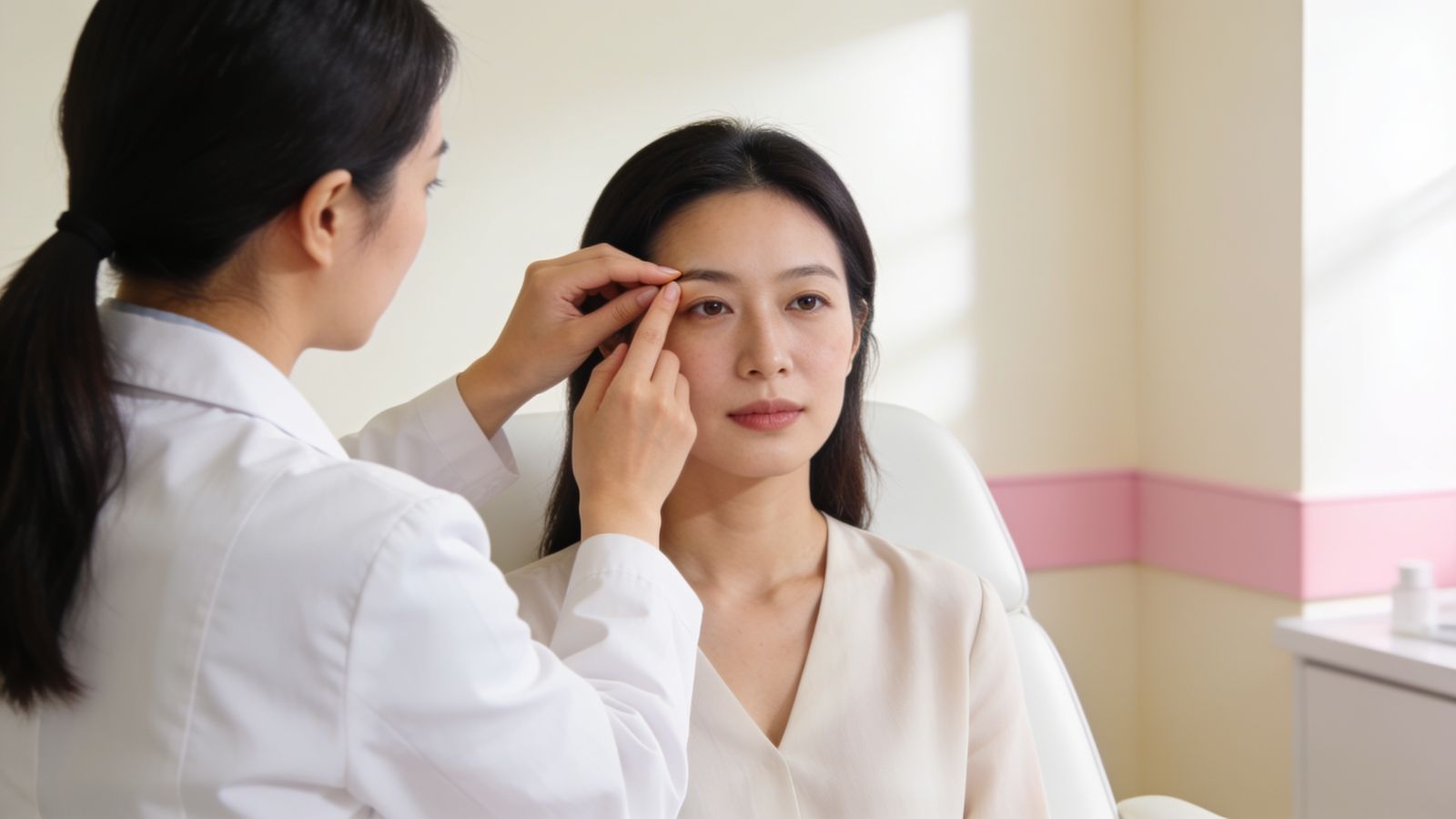
A patient discussing skin firmness and collagen support with the doctor
Illustrative image. Not a patient of IN Eternity Clinic.
PDLLA

PDLLA boosters such as Juvelook

PDLLA belongs to the same polylactic acid family as Sculptra but is a different polymer form. In Juvelook, porous PDLLA microspheres are supplied with a small amount of non-cross-linked hyaluronic acid and mixed with sterile water before use. The hyaluronic acid hydrates briefly; the microspheres provoke a controlled tissue response in which fibroblasts make new collagen. Animal studies show increased collagen and new small blood vessels around PDLLA, and clinical use has focused on skin texture, crepiness, enlarged pores and shallow acne scars.

It is placed in or just beneath the dermis, by cannula or fine injections, over a course of sessions. The under-eye area needs particular care: reports describe PDLLA tracking along the lower eyelid and forming firm nodules after tear-trough use, so it is used there only with great caution, if at all. A related product with a higher PDLLA load is marketed for volume rather than skin quality.

“The first question about any collagen booster is whether it makes collagen or brings it in. That answer changes the timeline, the risks and what to expect.”
— Dr Sin Yong, Medical Director, IN Eternity Clinic
PLLA

PLLA: Sculptra as a skin booster

Sculptra is poly-L-lactic acid, the longest-established biostimulator, used for gradual volume restoration in areas such as the temples and cheeks. Its particles are irregular and crystalline, and they are placed deep, under the skin or near bone. More recently, more diluted PLLA has been spread across wider areas for skin firmness rather than volume, including the neck, décolletage, arms and abdomen.

Used this way it behaves like a slow skin booster: little to see at first, then gradual firming over months. Because PLLA particles can form nodules if placed too superficially or too concentrated, dilution, depth and massage are planned carefully. Sculptra vs Juvelook compares the two polylactic acids side by side, and Sculptra side effects explains how nodules are avoided.

Woven mesh and silk thread, suggesting the collagen network in skin
Illustrative image. Not a patient of IN Eternity Clinic.
ECM and atelocollagen

ECM and atelocollagen boosters

ECM boosters aim to supply the scaffold itself. Most contain atelocollagen, collagen that has been purified, usually from pig skin, with the end segments that provoke most immune reactions removed. Injected into the skin, it gives an early, soft improvement and may act as a scaffold for the skin’s own cells before it is gradually broken down. A multicentre study of a porcine collagen filler in Asian patients reported correction of nasolabial folds over twelve months with mostly mild reactions.

Animal-derived collagen raises separate questions: allergy and sensitisation, religious or dietary considerations about porcine material, and differences in purification between manufacturers. IN Eternity Clinic does not use animal-collagen injectables; its collagen-support options are limited to absorbable biostimulators it knows how to manage, as explained on treatments we choose not to offer. This guide describes ECM boosters so you can understand what you may be offered elsewhere.

At a glance

PDLLA vs PLLA vs ECM boosters compared

PDLLAPLLA (diluted)ECM / atelocollagen
MechanismStimulates collagenStimulates collagenSupplies collagen
DepthDermisDeep dermis to under skinDermis
When it showsWeeks to monthsMonthsEarlier, then absorbed
Main cautionNodules; under-eyeNodules if superficialAllergy; animal source
At IN Eternity ClinicUsed (Juvelook)Used (Sculptra)Not used

Diluted calcium hydroxylapatite (Radiesse) and polycaprolactone (Ellansé) also stimulate collagen and are sometimes used for skin quality; Sculptra vs Radiesse vs Ellansé compares them.

Choosing

Who suits a collagen booster, and who does not

Collagen boosters suit skin that has become thinner, crepey or less firm, where the face shape is still broadly right. They suit people who prefer a gradual change and accept that the result is judged over months. Where the main problem is dehydration, a hyaluronic acid booster or Profhilo is more direct; where the skin is thin, fragile or slow to heal, a polynucleotide such as Rejuran may be the better start.

They are not the right tool for sagging, for a heavy lower face, or for areas that already hold old product. Sagging is a lifting question: leaner faces are usually matched to VF Lift – Vertical Facelift on CLASSYS Volnewmer, and fuller lower faces to Time Freeze Laser LCLR®. Collagen boosters are avoided during pregnancy and breastfeeding, over active infection or inflammation, and in people with a history of nodules or keloid scarring until that is discussed. Because polylactic acids cannot be dissolved, Dr Sin Yong keeps the first dose conservative and reviews the skin before adding more.

What to expect

What a collagen booster session feels like, and the months after

Numbing cream is applied for 30 to 45 minutes, and most preparations include a small amount of local anaesthetic. PDLLA boosters are usually placed through a few cannula entry points or as fine injections across the area; PLLA is placed deeper in small amounts. Most people describe pressure, small pricks and a brief sting. A session usually takes under an hour including numbing.

Afterwards, expect swelling, tenderness and possible small bruises for a few days, and small bumps at injection points after PDLLA that settle within a day or two. Any early plumpness is water and fades within the first week. The collagen change builds over the following four to twelve weeks, so sessions are spaced about four to six weeks apart and the effect is judged against photographs taken at the start. Massage is advised after PLLA; for PDLLA, follow the specific instructions given at your visit.

Sun protection, not smoking and good sleep all help the collagen your skin makes to last. Energy-based treatments that also stimulate collagen, such as RF microneedling or FSX Laser, can be layered into the plan, usually spaced from injection sessions so the effect of each can be seen.

Myths and facts

Common myths, answered

Questions

Frequently asked questions

What is a collagen skin booster?

It is an injectable intended to increase collagen in the skin. Most, such as PDLLA (for example Juvelook) and diluted PLLA (for example Sculptra), are biostimulators that prompt your own skin to make collagen over months. A smaller group, ECM or atelocollagen boosters, supply purified animal collagen directly. They work differently and carry different risks.

Is Juvelook a collagen booster?

Yes, in the biostimulator sense. Juvelook contains poly-D,L-lactic acid microspheres with a little hyaluronic acid. It does not contain collagen; it prompts fibroblasts to build new collagen around the microspheres over the weeks after each session. It is used for texture, crepiness and shallow scars, not for volume.

Can Sculptra be used as a skin booster?

Diluted further and spread more widely, poly-L-lactic acid is used for skin firmness on areas such as the neck, arms and abdomen, as well as for facial volume. Used this way it behaves like a slow skin booster. Placement depth, dilution and massage are planned carefully to reduce the risk of nodules.

Does IN Eternity Clinic offer ECM or atelocollagen boosters?

No. IN Eternity Clinic does not use animal-derived collagen injectables. Collagen support is provided with registered biostimulators such as Juvelook and Sculptra, and with energy-based treatments. This guide explains ECM boosters so you can understand what may be offered elsewhere and what to ask about source, registration and allergy.

How long do collagen boosters last?

It varies with the product, your age, skin and lifestyle. Biostimulator results build over months and are often maintained with a top-up session every year or so. Supplied collagen is gradually broken down. Sun protection and avoiding smoking help preserve the collagen your skin makes.

How much does a collagen skin booster cost in Singapore?

Cost depends on which product is used, how many vials each session needs, the size of the area and how many sessions the course requires. Facial skin plans differ from body plans. Dr Sin Yong gives a written, itemised quote after assessment, and the consultation fee is waived with any medical treatment.

Related at IN Eternity Clinic
Juvelook (PDLLA)SculptraSkin boostersSculptra vs JuvelookCollagen guideTreatments we choose not to offer

Book an assessment

IN Eternity Clinic, 9 Scotts Road, #12-01 Pacific Plaza, Singapore 228210. By appointment with Medical Director Dr Sin Yong. Monday to Saturday, 11am to 8pm. WhatsApp or call +65 8815 3008.

WhatsApp to Enquire →Call +65 8815 3008
S
Dr Sin Yong
MBBS (NUS) · MRCS (Edinburgh) · MSc Aesthetic Medicine (London) · MSc Practical Dermatology (Cardiff)
International KOL — CLASSYS · HIRONIC · DEKA · ALMA · FOTONA · LUTRONIC

References

  1. Chen SY, Lin JY, Lin CY. Compositions of injectable poly-D,L-lactic acid and injectable poly-L-lactic acid. Clin Exp Dermatol 2020;45(3):347-348. doi:10.1111/ced.14085
  2. Oh S, Seo SB, Kim G, et al. Poly-D,L-Lactic Acid Stimulates Angiogenesis and Collagen Synthesis in Aged Animal Skin. Int J Mol Sci 2023;24(9):7986. doi:10.3390/ijms24097986
  3. Fitzgerald R, Vleggaar D. Facial volume restoration of the aging face with poly-l-lactic acid. Dermatol Ther 2011;24(1):2-27. doi:10.1111/j.1529-8019.2010.01375.x
  4. Lee JH, Choi YS, Kim SM, et al. Efficacy and Safety of Porcine Collagen Filler for Nasolabial Fold Correction in Asians: A Prospective Multicenter, 12 Months Follow-up Study. J Korean Med Sci 2014;29(Suppl 3):S217-S221. doi:10.3346/jkms.2014.29.S3.S217
  5. Goldie K, Peeters W, Alghoul M, et al. Global Consensus Guidelines for the Injection of Diluted and Hyperdiluted Calcium Hydroxylapatite for Skin Tightening. Dermatol Surg 2018;44 Suppl 1:S32-S41. doi:10.1097/DSS.0000000000001685

These sources describe mechanisms and general evidence. They are not a promise of any individual result; suitability is decided at an in-person assessment.

WhatsApp us