
Hairline Embroidery in Singapore: A Natural Hairline Tattoo, Designed for Later Years
Medical Director Dr Sin Yong explains how hairline embroidery is designed, who it suits, how sessions and healing work, and why the cause of hair loss is checked first at IN Eternity Clinic.
WhatsApp to Enquire →Key facts ↓Hairline embroidery is scalp micropigmentation focused on the front hairline: tiny pigment dots placed in the upper scalp to recreate a soft, short-hair edge and fill receding temples. It does not grow hair or stop hair loss, so the cause is assessed first. Density is built over two to three sessions, one to three weeks apart, then touched up as pigment fades over years. See scalp micropigmentation in Singapore.
What hairline embroidery work looks like
Photos of work by our embroidery specialist. As on our results gallery, the “after” side is softened online and shown in full, with context, at your consultation. Results vary between people.
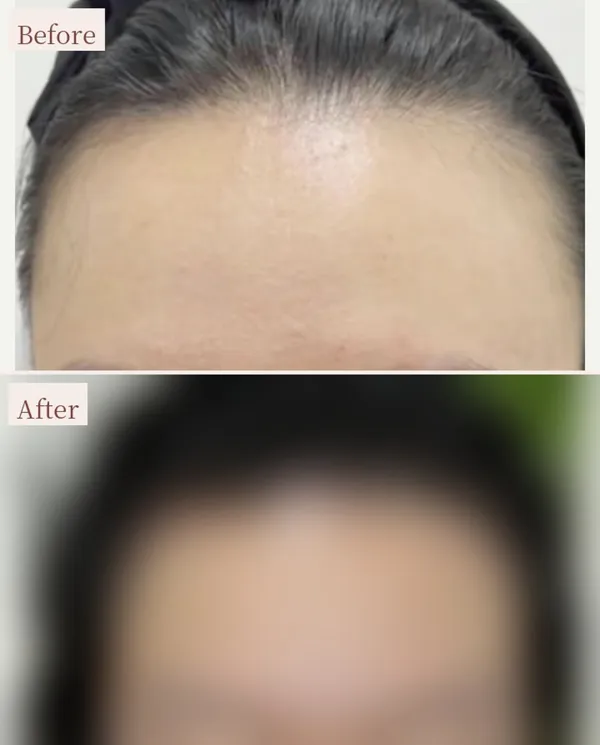
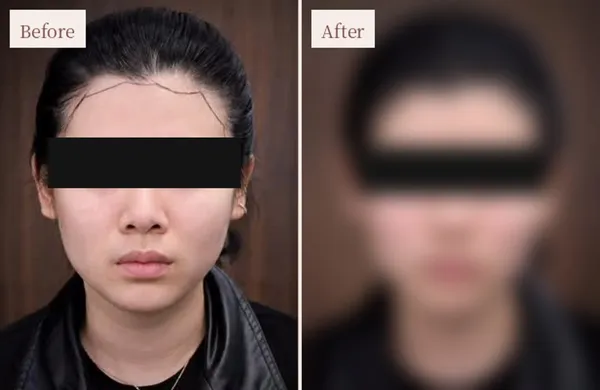
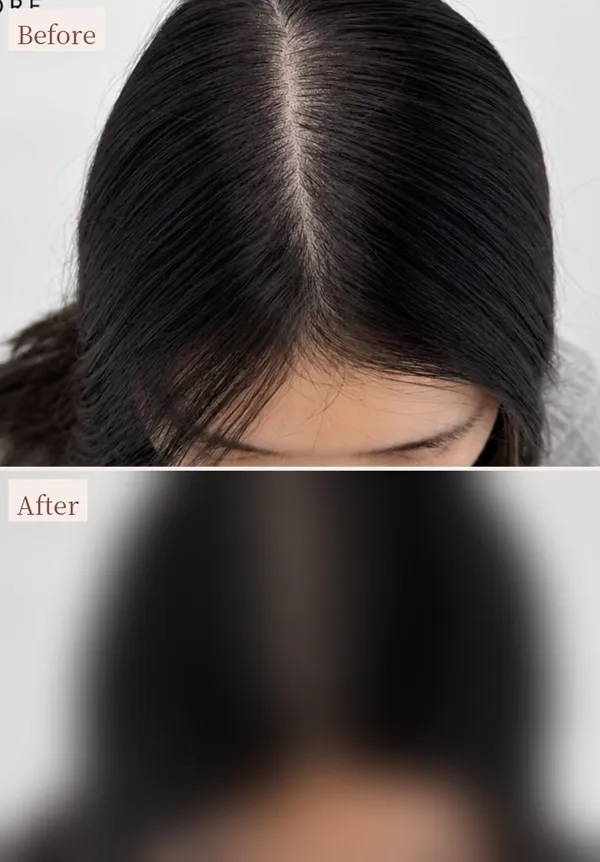
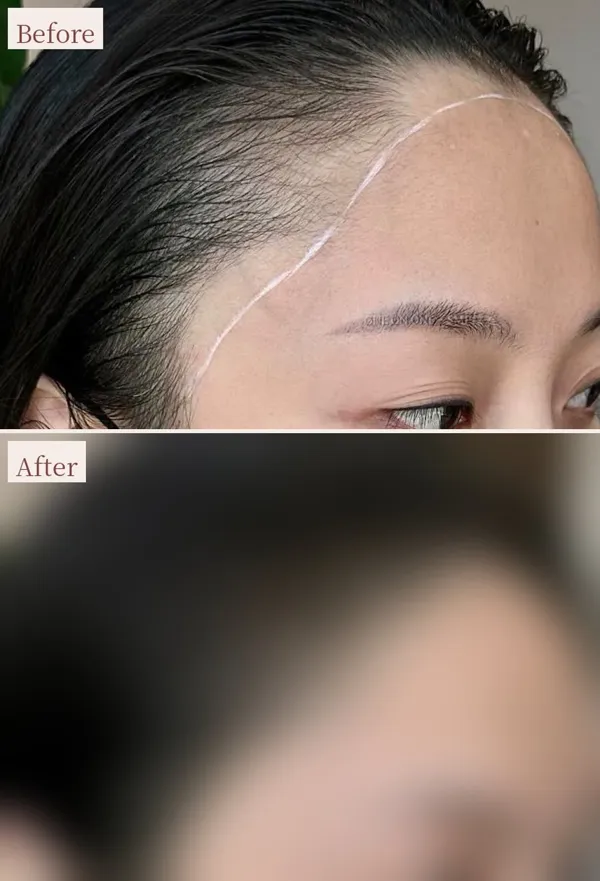
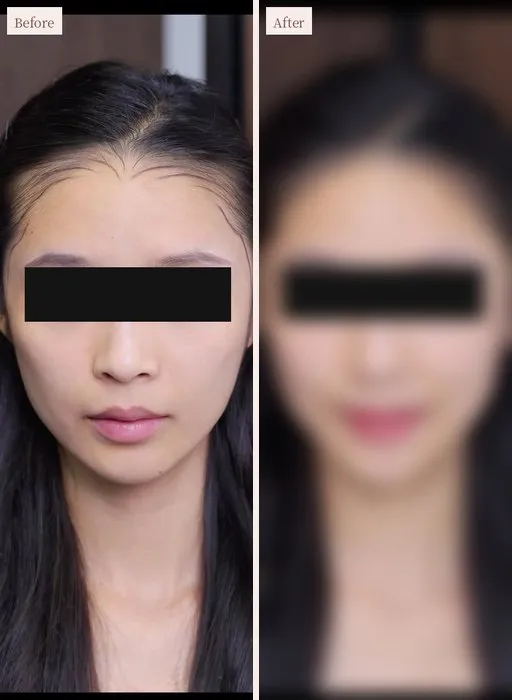
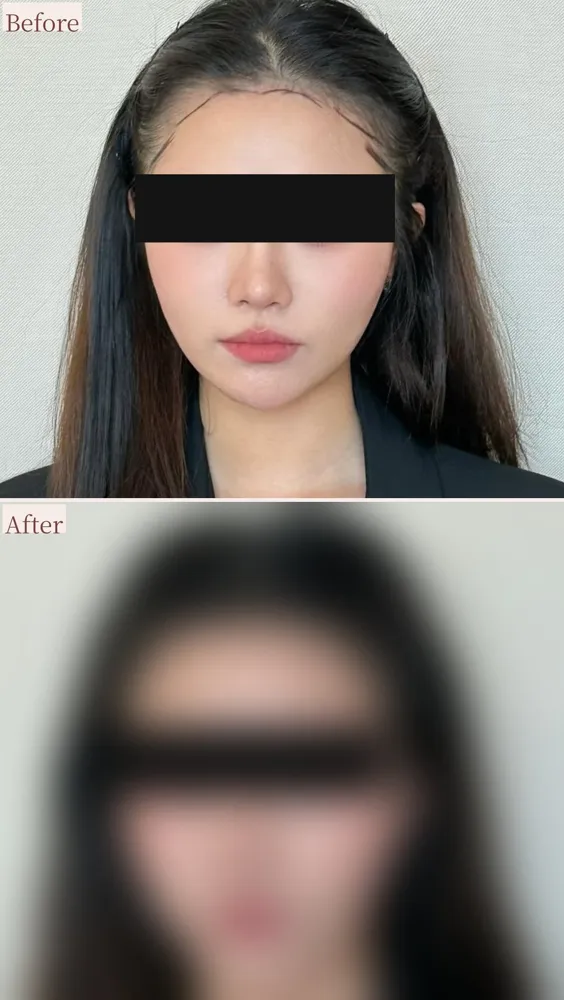
- Natural asymmetry: in 125 East Asian men with little or no hair loss, hair at the hairline grew at about 55 degrees on the right and 33 degrees on the left, a natural difference of about 22 degrees [2].
- Women's hairlines: in 229 Thai women, the mid-frontal line averaged 6.45 cm and did not change with age; lateral mounds were seen in 42% and a widow's peak in 24% [3].
- Time and skill: a review describes SMP as labour-intensive and customised to each scalp, sometimes needing several sessions and up to 20 hours of procedure time in total [4].
- Corrections: of 120 people treated at one centre for unsatisfactory SMP, 89.2% had first been treated at a tattooing or beauty facility, and 61.7% went on to hair transplant surgery as part of the correction [5].
- Medical treatment: a meta-analysis of randomised trials found minoxidil, finasteride and low-level laser more effective than placebo for hair growth in men with pattern hair loss, and minoxidil in women [6].
What is hairline embroidery?
Hairline embroidery, also called a hairline tattoo or hair tattoo, is scalp micropigmentation (SMP) concentrated on the front of the scalp. Thousands of tiny dots are placed in the upper dermis, each sized and spaced to look like the cut end of a short hair. From a normal viewing distance the edge reads as a closely shaved hairline, or, if you keep some length, the scalp showing through at the temples looks less bright.
The word "embroidery" is borrowed from brow work, but the technique is different: SMP uses dots rather than hair strokes, because strokes on the scalp tend to blur. In Singapore cosmetic tattooing, including SMP, is usually offered as a beauty service in studios. Scalp micropigmentation is offered at IN Eternity Clinic. The cause of your hair loss, your scalp and the design are assessed at consultation, and the pigment work itself is done by our embroidery specialist, not a doctor. Pigment changes how the scalp looks; it does not grow hair, slow hair loss or treat the scalp, which is why the medical question comes first.
How is a natural-looking hairline designed?
The design decides whether a hairline tattoo looks like hair or like a drawn line. A review of hairline design describes two core skills: placing the borders of the hairline correctly, and copying the visual character of a natural edge, which is a soft, irregular transition zone rather than a sharp line [1]. Pigment, unlike grafts, cannot be moved later, so the first design is drawn conservatively.
| Element | What a natural design does | Common mistake |
|---|---|---|
| Height | Sits at an age-appropriate, slightly mature position, often a little higher than your teenage hairline | A low, straight hairline that looks wrong as the face ages |
| Edge | A soft transition zone with finer, more widely spaced dots in front [1] | A hard, dense border that reads as a line |
| Temple points | Frames the face and keeps a gentle recession at the corners | Filling the temples flat, which looks artificial |
| Symmetry | Close to symmetrical but not mirror-perfect [2] | A ruler-straight, perfectly symmetrical shape |
| Shade and dot size | Matched to your hair colour and stubble; smaller and lighter at the edge | Dots too dark or too large, which can blur together over time |
Symmetry is a good example. In 125 East Asian men with little or no hair loss, hair at the hairline grew at different angles on the two sides, on average about 22 degrees apart; the authors note that perfectly symmetrical designs can look unnatural [2]. Height is the other. Hairlines naturally rise slightly in most men during their twenties, so a design that is softer and slightly higher than a youthful hairline usually ages better.
Who suits hairline embroidery: receding hairlines, high foreheads and women?
A receding hairline. Men with pattern hair loss at the temples who prefer a short or shaved look are the most common candidates. If more recession is expected, the design accounts for it, and medical treatment is usually discussed to protect the hair that remains; see receding hairline treatment.
A naturally high forehead. Some people have a stable, high hairline rather than hair loss. A soft band of dots can visually lower the edge a little, within what still looks natural, if nearby hair is kept short enough to blend.
Women's hairlines. Women more often want a softer edge or less scalp showing at the temples while keeping their hair long. Female hairlines differ from men's: in 229 Thai women the mid-frontal line averaged 6.45 cm and did not change with age, and lateral mounds and widow's peaks were common features rather than flaws [3]. Front-of-scalp thinning in a woman also points to causes such as traction from tight hairstyles or frontal fibrosing alopecia, a scarring condition, which must be assessed before pigment is placed. See SMP for women and thinning hair.
Grey, white or very fair hair is harder, because the illusion relies on contrast. Active scalp inflammation, keloids or past pigment reactions are reasons to wait.
How many sessions does hairline embroidery take, and how long does it last?
Density is built in layers so each one heals and can be judged before more is added. A typical plan is two to three sessions, sometimes four, spaced one to three weeks apart, then touch-ups every few years. Each session usually takes two to four hours, depending on the area; numbing cream is used, and most people describe a scratching sensation that is uncomfortable rather than very painful. A review notes that a full plan can need several sessions and up to 20 hours in total, because each scalp holds pigment differently [4].
After each session the scalp is red and the dots look slightly raised and darker than they will heal. Tiny crusts form and flake off over about a week, and most people return to work the next day. Pigment usually lasts several years, fading gradually; sun, an oily scalp and placement depth affect how fast. Dots placed too deep can spread or turn bluish, so depth control matters as much as design.
Hairline embroidery vs hair transplant vs medication: which suits?
They do different jobs and are often combined. Medication and low-level laser act on follicles that are still alive: a meta-analysis of randomised trials found minoxidil, finasteride and low-level laser therapy more effective than placebo for hair growth in men with pattern loss, and minoxidil in women [6]. A hair transplant moves follicles from the back of the scalp. Hairline embroidery changes only how the scalp looks.
| Option | What it does | Grows or moves hair | Upkeep |
|---|---|---|---|
| Hairline embroidery (SMP) | Pigment dots recreate a short-hair edge or reduce scalp show-through | No | Touch-ups every few years |
| Medical treatment | Treats the cause and supports follicles still present [6] | Can thicken existing hair | Ongoing |
| Hair transplant (surgical clinics) | Moves follicles from the donor area to the hairline | Moves existing hair | Native hair still needs treatment |
| Hair fibres or concealers | Colour the scalp for the day | No | Daily |
Which suits depends on how much hair remains and how you want to wear it. In a study of 40 women with female pattern hair loss, hair density was the most important factor in choosing between the two: SMP was recommended where density was higher, and transplant surgery where it was lower [7]. Where surgery may help, a surgical opinion is discussed rather than offered here.
Why does Dr Sin Yong check the cause of hair loss first?
Because a hairline drawn over hair loss that is still moving can look wrong within a few years. Dr Sin Yong examines the scalp with trichoscopy, looking for miniaturising hairs, signs of traction, inflammation or scarring, and asks about shedding, family history, medicines and, in women, iron, thyroid and hormones. Pattern loss may be treated with medicine, H2LT low-level laser, 1540 nm non-ablative fractional laser or Regenera Activa micrografts; scarring conditions are referred for dermatology care before any pigment is considered. See hair loss treatment in Singapore and female hair loss treatment.
Once the cause is understood, the hairline is designed with you, and the pigment work is done by the clinic's embroidery specialist using sterile, single-use needles opened in front of you. A reaction is assessed by a doctor in the same clinic, and over-dark pigment can be lightened with picosecond or Q-switched laser. Correction is slow: in one series of 120 people with unsatisfactory SMP, most of them first treated at tattooing or beauty facilities, corrections involved laser removal, repeat SMP or transplant surgery [5]. A conservative first design is the simplest protection. See tattoo removal. Suitability is decided at an in-person assessment, and results vary.
What Dr Sin Yong looks for
- The cause and stage of hair loss, checked with trichoscopy, and whether it is still progressing.
- Signs of traction, inflammation or scarring at the front of the scalp that rule pigment out for now.
- Your natural hairline position, temple points and forehead height, and what will suit you in ten years.
- Hair and scalp colour, including grey hairs, which decide the shade and whether pigment will blend.
- Previous SMP, hair transplant or scalp scars, and any past reaction to pigment.
General clinical observations used at consultation; they describe what is checked, not any individual result.
Frequently asked questions
What is hairline embroidery?
Hairline embroidery is scalp micropigmentation focused on the front hairline. Tiny pigment dots are placed in the upper scalp to look like the cut ends of short hairs, recreating a soft edge or filling receding temples. It changes appearance only and does not grow hair or stop hair loss.
Is a hairline tattoo the same as hairline embroidery?
Yes, the terms usually describe the same thing: scalp micropigmentation along the hairline, using dots rather than hair strokes, because strokes on the scalp tend to blur. At IN Eternity Clinic the pigment work is done by the embroidery specialist.
Does a hair tattoo in Singapore look natural?
It can, when the dots are sized and spaced like real follicles, the shade suits your hair, and the edge is soft and slightly irregular rather than a hard line. A low, straight or overly dark hairline is the commonest reason a hair tattoo looks artificial. Results vary.
Is a non-surgical hairline tattoo permanent?
No. The pigment usually lasts several years and fades gradually, so touch-ups are planned every few years. Sun exposure, an oily scalp and placement depth affect how quickly it fades. Unwanted pigment can usually be lightened with laser, though complete clearance is not always possible.
Can a hairline restoration tattoo fix a receding hairline?
It can make a receding hairline look fuller or recreate a short-hair edge, but it does not regrow hair. If recession is still progressing, medical treatment is usually discussed alongside, so the design is not left behind as the hairline changes.
Can women have hairline embroidery?
Yes. For women it is usually used to soften the edge or reduce scalp show-through at the temples while keeping hair long. Front-of-scalp thinning in women needs a medical check first, because traction or scarring conditions must be ruled out before pigment is placed.
Hairline embroidery or hair transplant: which should I choose?
They do different jobs. A transplant moves living follicles; hairline embroidery only changes how the scalp looks. Which suits depends on how much hair remains, your donor area, how you want to wear your hair and whether loss is still progressing. Hair transplant surgery is not offered at IN Eternity Clinic; a surgical opinion is discussed where it may help.
Book an assessment
IN Eternity Clinic, 9 Scotts Road, #12-01 Pacific Plaza, Singapore 228210. By appointment with Medical Director Dr Sin Yong. Monday to Saturday, 11am to 8pm. WhatsApp or call +65 8815 3008. At IN Eternity Clinic a consultation fee applies, and it is waived if you go ahead with any medical treatment; the fee is S$120.
International KOL — CLASSYS · HIRONIC · DEKA · ALMA · FOTONA · LUTRONIC
References
- Shapiro R, Shapiro P. Hairline design and frontal hairline restoration. Facial Plast Surg Clin North Am 2013;21(3):351-362. doi:10.1016/j.fsc.2013.06.001
- Kim J, Wan J, Jang T, Yi KH. Natural asymmetry in hair growth direction: implications for hairline design in male patients. J Craniofac Surg 2025;36(7):e843-e845. doi:10.1097/SCS.0000000000011231
- Natpracha W, Sukanjanapong S, Chanprapaph K, Suchonwanit P. Characterization and classification of different female hairline patterns in the Thai population. J Cosmet Dermatol 2021;20(3):890-896. doi:10.1111/jocd.13642
- Rassman WR, Pak JP, Kim J. Scalp micropigmentation: a useful treatment for hair loss. Facial Plast Surg Clin North Am 2013;21(3):497-503. doi:10.1016/j.fsc.2013.05.010
- Park JH, Kim N, Kim DW, Lee I. Revision for unsatisfactory outcomes of scalp micropigmentation. Int J Dermatol 2025;64(1):136-141. doi:10.1111/ijd.17260
- Adil A, Godwin M. The effectiveness of treatments for androgenetic alopecia: a systematic review and meta-analysis. J Am Acad Dermatol 2017;77(1):136-141.e5. doi:10.1016/j.jaad.2017.02.054
- Park JH, Kim N, You SH. Hair transplantation versus scalp micropigmentation: a retrospective study of treatment selection in persons with female pattern hair loss. J Cosmet Dermatol 2024;23(10):3347-3355. doi:10.1111/jocd.16429
These sources describe mechanisms and general evidence. They are not a promise of any individual result; suitability is decided at an in-person assessment.