
Skin Tag, Wart & Milia Removal in Singapore
Small growths are simple to remove — once you know what they are. At IN Eternity Clinic every lesion is examined by Medical Director Dr Sin Yong before it is removed, using the method that suits that growth and the skin around it.
- Doctor-examined first
- Usually one short visit
- Face, eyelids, neck & body
- DEKA Centre of Excellence
Assessment with Dr Sin Yong · Mon–Sat 11am–8pm · Pacific Plaza, 9 Scotts Road
The short answer
How are skin tags, warts and milia removed?
Each is a different growth, so each is removed differently. Skin tags are harmless flaps of skin that are taken off at the stalk, usually in one visit, and do not return at the same spot. Warts are a skin infection with human papillomavirus (HPV); the visible wart is destroyed with laser, radiofrequency, freezing or topical treatment, but the virus can persist in nearby normal-looking skin, so more than one session is common. Milia are tiny keratin cysts with no opening, which is why squeezing does not work; they are released through a fine opening or treated with radiofrequency or laser. At IN Eternity Clinic every lesion is examined by Dr Sin Yong first, and anything unusual is assessed before removal.
What we remove
Three common growths, three different approaches
These growths are benign and very common in Singapore’s climate, but they are easily confused with each other and with lesions that need a different kind of attention.
Skin tags
Soft, skin-coloured or brown flaps on a thin stalk, usually on the neck, underarms, eyelids, groin or under the breasts where skin rubs. Removed at the base; the treated tag does not grow back.
Warts
Rough, raised bumps on hands, feet, face or body, sometimes with tiny black dots. Contagious and prone to recurrence, so treatment is planned as a short course where needed.
Milia
Firm, pearly white pinhead bumps, most often around the eyes and cheeks. Not whiteheads and not acne; they need a small opening to release the keratin.
Delicate areas
Growths near the eyes and on the face are removed with fine settings to keep marks small and healing quick.
Multiple lesions
Several tags or milia can often be treated in the same visit. A sudden increase in skin tags is worth mentioning, as it can be linked to insulin resistance.
Uncertain spots
Pigmented, changing, bleeding or irregular lesions are examined first and are not simply removed; referral or further assessment is arranged when needed.
Key facts
Eight things worth knowing before removal
- Skin tags do not regrow at the same siteA skin tag removed at its stalk does not return in that spot, although new tags can appear elsewhere over time.
- Friction and metabolism play a roleSkin tags cluster where skin folds and rubs; studies have linked multiple skin tags with insulin resistance, so a sudden crop may be worth a metabolic check.
- Warts are an infection, not just a bumpWarts are caused by HPV. Destroying the visible lesion does not clear virus from surrounding normal-looking skin, which is why recurrence is common.
- Wart treatments work, but not instantlyA Cochrane review of 85 trials (8,815 people) found salicylic acid better than placebo for clearing warts; pooled evidence for freezing versus placebo was less certain.
- Stubborn warts need patienceIn a randomised trial of plantar warts, freezing and salicylic acid each cleared about 14% of people at 12 weeks — which is why a structured, repeated plan matters.
- Milia have no openingMilia are small keratin-filled cysts under the surface with no pore, so squeezing and acne products do not remove them; they are released through a tiny opening.
- CO₂ laser is an established optionClinical guidelines list ablative CO₂ laser among the recognised methods for removing benign growths such as skin tags and warts, with precise control of depth.
- Diagnosis comes before removalSome lesions resemble skin tags or warts but are not. Examining first avoids removing something that should be assessed differently.
Removing a wart is the easy part. Keeping it gone is the actual treatment — because the virus sits in skin that still looks normal, and that is where most recurrences start.
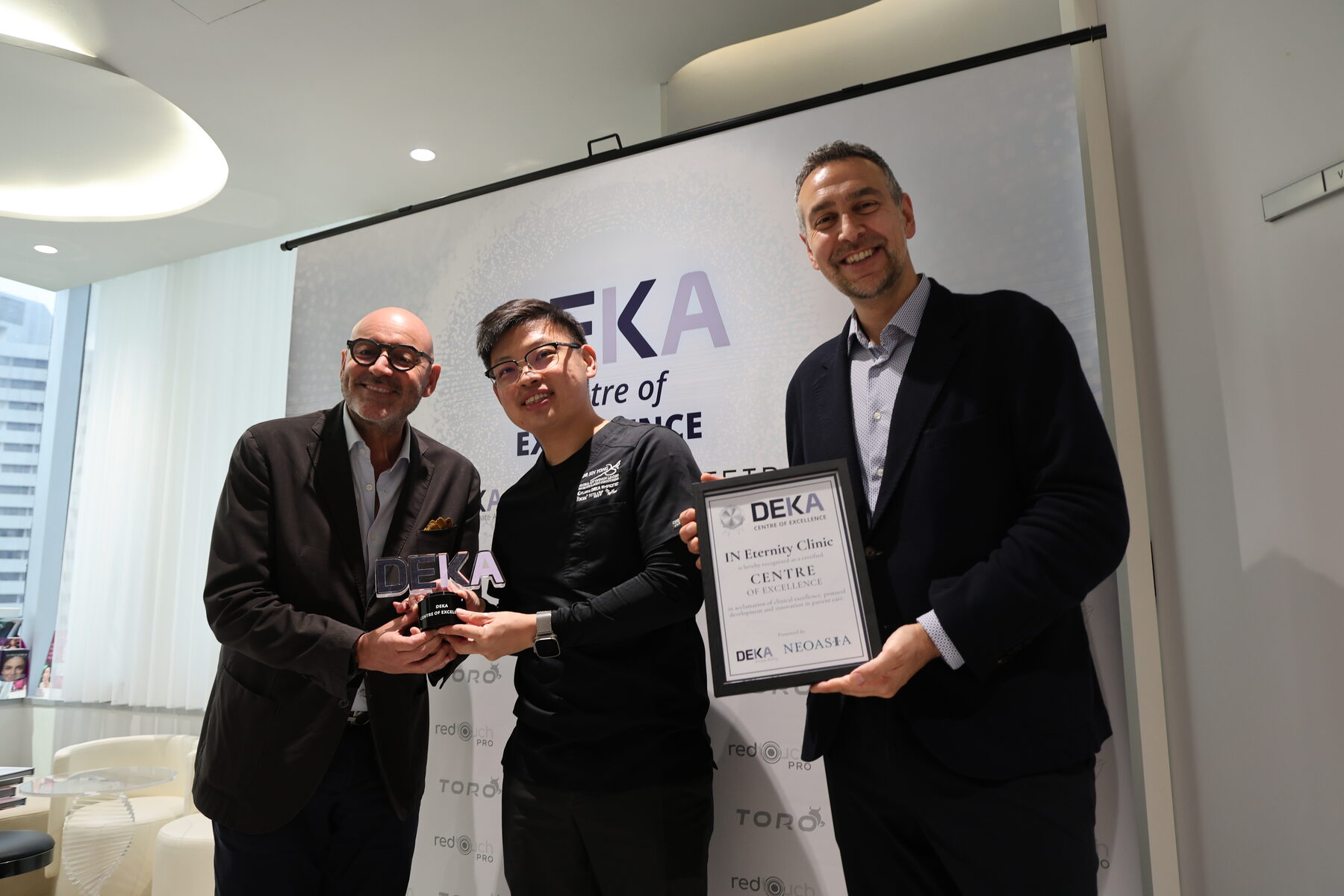
IN Eternity Clinic was designated a DEKA Centre of Excellence by DEKA and NeoAsia in July 2026.
Who treats you
Assessed and treated by Medical Director Dr Sin Yong
Dr Sin Yong examines each growth himself, confirms what it is, and chooses the method that will leave the smallest mark for that area — including on the eyelids and face. He holds an MSc in Practical Dermatology from Cardiff University and leads a clinic designated a DEKA Centre of Excellence.
- MBBS, National University of Singapore
- MRCS, Royal College of Surgeons of Edinburgh
- MSc Aesthetic Medicine, University of London
- MSc Practical Dermatology, Cardiff University
International Key Opinion Leader · CLASSYS · HIRONIC · DEKA · ALMA · FOTONA · LUTRONIC
How it works at IN Eternity
From first message to smooth skin
WhatsApp us
Send a message, and a photo if you wish. Our team arranges a short visit at Pacific Plaza.
Examination
Dr Sin Yong checks each lesion to confirm whether it is a skin tag, wart, milium or something that needs a different approach.
Your plan
The method, number of lesions and cost are agreed before treatment. Numbing cream or local anaesthetic is used.
Removal and aftercare
Most removals take minutes. Small scabs heal over about a week; warts are reviewed and repeated if needed.
Which method for which growth
How each growth is usually treated
The method is matched to the growth, its size and where it sits. These are the options used in clinic practice.
| Skin tags | Warts | Milia | |
|---|---|---|---|
| What it is | Benign skin flap on a stalk | HPV infection of the skin | Keratin-filled micro-cyst |
| Common methods | Snip or radiofrequency at the base; CO₂ laser | Freezing, radiofrequency, CO₂ laser, topical acids | Fine opening and extraction; radiofrequency or laser |
| Sessions | Usually one | Often several, 2–4 weeks apart | Usually one |
| Recurrence | Not at the same site; new tags possible | Common; virus persists nearby | New milia can form |
| Healing | Small scab, about 5–10 days | Scab or blister, 1–2 weeks | Tiny marks, a few days |
Summary based on the references below. The method used at IN Eternity Clinic is chosen after examination.
The tools
Precise tools for small lesions
Ablative CO₂ laser
Vaporises tissue layer by layer with fine control of depth, useful for raised lesions and warts while limiting damage to surrounding skin. IN Eternity Clinic is a designated DEKA Centre of Excellence.
Fine radiofrequency tip and sterile extraction
A fine radiofrequency tip seals and removes small tags and treats milia; milia can also be released through a tiny opening and gently expressed.
What to expect
The visit, healing and results
| Visit length | Usually 15–30 minutes including examination; longer for many lesions |
| Comfort | Numbing cream or a small local anaesthetic injection is used, so removal itself is usually comfortable |
| Downtime | Small scabs or pink marks for about 5–10 days; make-up can usually be worn after the scabs settle |
| Number of sessions | Skin tags and milia: usually one. Warts: often two to four sessions |
| Marks | Usually small and fading; temporary darkening can occur in Asian skin and is treated with sun protection |
| Aftercare | Keep clean and dry, apply the ointment provided, avoid picking, use sunscreen on the face |
Typical ranges only. Your own plan, number of sessions and cost are set at consultation after assessment.
Suitability & safety
Who removal suits — and when we wait
Usually a good fit
- Skin tags on the neck, underarms, eyelids, groin or body
- Common, flat or plantar warts
- Milia around the eyes, cheeks or forehead
- People wanting a doctor to confirm what the lesion is first
Treated with caution or deferred
- Lesions that are changing, irregular in colour, bleeding or growing quickly — examined and assessed first
- Genital warts — assessed separately with appropriate care
- Active infection or inflamed skin at the site
- Pregnancy, for non-urgent removals (usually deferred)
- Moles — assessed as a separate consultation
Possible effects include small scabs, temporary pink or dark marks, minor scarring, and recurrence of warts or new growths elsewhere. These are discussed before treatment.
Questions patients ask
Skin tag, wart and milia removal FAQ
Does skin tag removal hurt?
Numbing cream or a small local anaesthetic is used, so removal is usually comfortable. Most people feel only brief pressure or warmth.
Will skin tags come back after removal?
A skin tag removed at its stalk does not grow back at the same spot, but new tags can form elsewhere, especially in areas of friction.
How many sessions does wart removal take?
Small warts may clear in one session, but warts are an HPV infection and often need two to four sessions spaced a few weeks apart. Plantar warts can take longer.
Can I remove milia by squeezing them?
No. Milia are keratin cysts with no opening, so squeezing usually fails and can mark the skin. They are released through a tiny sterile opening or treated with radiofrequency or laser.
Can skin tags near the eyes be removed?
Yes. Skin tags and milia on the eyelids are removed with fine settings and careful technique to protect the eye and keep marks small.
Will removal leave a scar?
Most removals leave a small pink or darker mark that fades over weeks. Temporary darkening is more likely in Asian skin, so sun protection is advised.
Is it safe to remove skin tags at home?
Home removal with thread, scissors or over-the-counter products risks bleeding, infection and scarring, and may miss a lesion that is not actually a skin tag.
How much does skin tag, wart or milia removal cost in Singapore?
Cost depends on the type, number and location of lesions and the method used. IN Eternity Clinic confirms the cost after examination, before removal.
Who performs the removal?
Every lesion is examined and removed under Medical Director Dr Sin Yong, who confirms what it is before treatment.
Book your assessment
Have it checked and removed properly
A short visit with Dr Sin Yong confirms what each growth is and removes it with the method that suits it. WhatsApp us to arrange a time.
WhatsApp +65 8815 3008IN Eternity Clinic · 9 Scotts Road, #12-01 Pacific Plaza, Singapore 228210 · Mon–Sat 11am–8pm · [email protected]
Related at IN Eternity
References
- Crook M. Skin tags: a useful clinical sign for insulin resistance? Eur J Dermatol. 2012. PubMed 22237167
- Kwok CS, et al. Topical treatments for cutaneous warts. Cochrane Database Syst Rev. 2012. PubMed 22972052
- Cockayne S, et al. Cryotherapy versus salicylic acid for the treatment of plantar warts (verrucae): a randomised controlled trial. BMJ. 2011. PubMed 21652750
- Berk DR, Bayliss SJ. Milia: a review and classification. J Am Acad Dermatol. 2008. PubMed 18819726
- Krupashankar DS, et al. Standard guidelines of care: CO2 laser for removal of benign skin lesions and resurfacing. Indian J Dermatol Venereol Leprol. 2008. PubMed 18688106
Medically reviewed by Dr Sin Yong, MBBS (NUS), MRCS (Edinburgh), MSc Aesthetic Medicine (London), MSc Practical Dermatology (Cardiff) · Last reviewed 27 September 2026. This page is general information and not a substitute for an individual medical assessment. Results vary between individuals.